

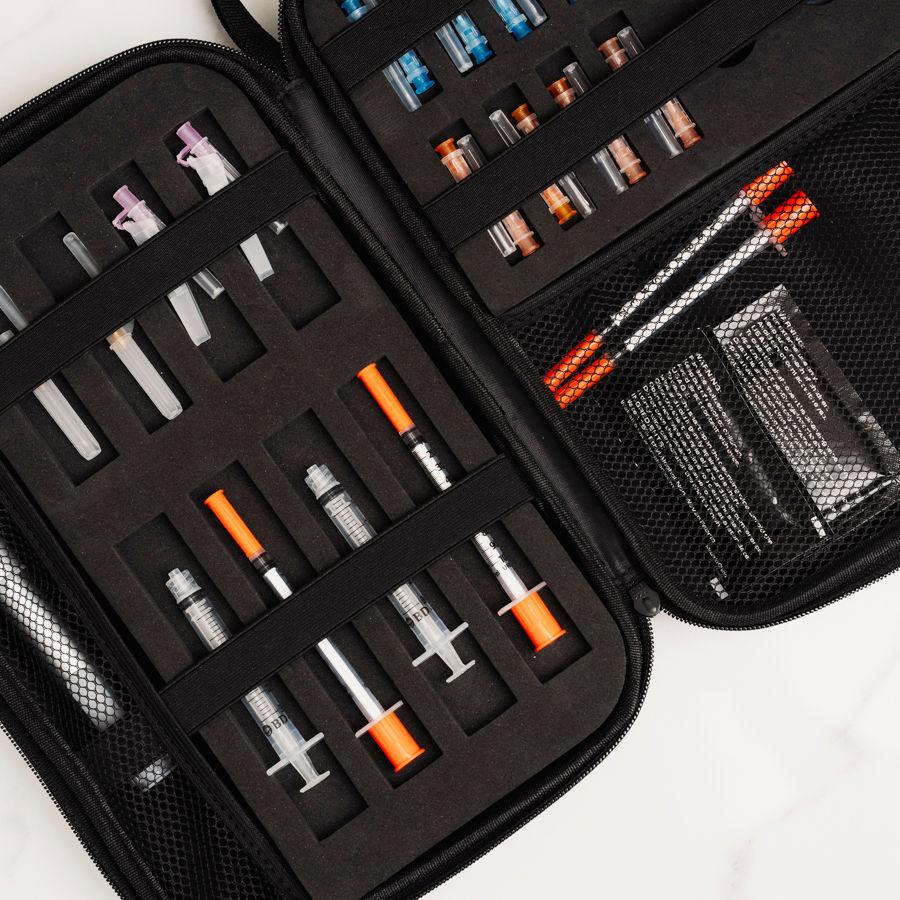
A well-organized TRT organizer can turn a scattered collection of supplies into a consistent, discreet routine. The right TRT case should do more than hold a few items. It should help you keep preparation materials together, create a cleaner and more repeatable setup, and make it easier to see what needs to be replenished. For people who take testosterone replacement therapy seriously, organization is not about making the process look impressive. It is about removing friction from a routine that may happen every week for years.
TRT users are often left to build their own system from unrelated products. Vials may be stored in one location, syringes in another, alcohol prep pads in a drawer, and disposal supplies somewhere else. That approach may work temporarily, but it becomes frustrating when you are searching for an item, preparing on an improvised surface, or realizing too late that you have run out of something important.
A dedicated system brings the full routine into one organized place.
What Is a TRT Organizer?
A TRT organizer is a dedicated system for arranging the non-disposable and disposable supplies associated with a prescribed testosterone replacement therapy routine. Depending on your provider’s instructions and the format of your prescription, that may include:
- Medication vials or prescribed delivery devices
- Packaged syringes
- Packaged needles
- Alcohol prep pads
- Adhesive bandages
- Provider instructions
- A separate approved sharps container
- A clean preparation surface
A TRT organizer is not a medical device, and it does not replace guidance from your clinician or pharmacist. Its role is organizational. It helps keep the materials associated with your routine orderly, discreet, and easier to manage.
Why Organizing TRT Supplies Matters
The most obvious benefit of organization is convenience, but the deeper value is consistency.
When your supplies have designated locations, you spend less time gathering materials and less mental energy wondering whether something is missing. A clear layout also makes inventory easier to review before your next scheduled routine.
An organized system can help you:
- See available supplies at a glance
- Separate unopened items from used or discarded materials
- Keep preparation products from becoming mixed with unrelated household items
- Maintain discretion in shared living spaces
- Create a repeatable preparation routine
- Notice when supplies are running low
- Reduce clutter around the preparation area
Organization does not change your prescription or your provider’s instructions. It simply gives the routine a defined place and structure.
What Should Be Stored in a TRT Case?
The contents of a TRT case should reflect your actual prescribed routine. Avoid filling it with unnecessary accessories simply because they fit. Every item should have a clear purpose.
Prescribed Medication
Keep prescribed medication in accordance with the labeling and the storage instructions provided by your clinician, pharmacist, or manufacturer. Some products may have specific temperature, light, positioning, or handling requirements.
A general-purpose TRT case should never be assumed to provide temperature control. Protocol Ritual’s current case does not include a cooling or cold-chain system. It should not be described or used as though it keeps medication cold. A dedicated cooling accessory is being tested for the future, but it is not part of the current system.
When temperature-controlled storage is required, use an appropriate solution recommended by your pharmacist or medication manufacturer.
Packaged Syringes and Needles
If your protocol uses separate syringes and needles, keep them sealed in their original sterile packaging until use. Organize them in a way that prevents the packaging from being crushed, punctured, or mixed with used materials.
You might separate supplies by type, size, or function, but labeling should remain simple. Avoid transferring sterile items into unmarked containers that make identification more difficult.
Alcohol Prep Pads
Use the correct terminology when planning your setup: alcohol prep pads, not wipes or swabs.
Keep alcohol prep pads in a dedicated compartment where they remain dry, sealed, and easy to count. Because they are small, they often disappear into bathroom drawers or become scattered among other supplies. A defined section of your TRT organizer keeps them visible and accessible.
Bandages and Small Preparation Items
Small adhesive bandages or other provider-approved preparation materials can be placed in a separate pocket or compartment. Keep them away from medication containers and from anything that has already been used.
Instructions and Prescription Information
A compact copy of relevant prescription details, provider instructions, or pharmacy information may be useful, particularly while traveling. Do not replace the original pharmacy label or separate medication from the legally required identifying information.
Sharps Disposal Supplies
A TRT case should not become a container for loose used needles or syringes.
Used sharps should be placed directly into an approved sharps disposal container according to local requirements and the instructions provided by your healthcare professional. The disposal container will usually remain separate from the organizer itself.
How to Organize TRT Supplies Step by Step
A useful system does not need to be complicated. It needs to be repeatable.
1. Take Inventory
Lay out your current supplies and identify what is actually part of your routine. Remove expired, damaged, unidentified, or unnecessary items according to pharmacist guidance and local disposal rules.
Create a basic inventory that includes:
- Medication
- Syringes
- Needles
- Alcohol prep pads
- Bandages
- Disposal supplies
- Provider documentation
Do not keep questionable medication or damaged sterile packaging simply because it has not been used.
2. Separate Supplies by Function
Group items according to when and how they are used.
A practical arrangement may include:
- Prescribed medication
- Preparation supplies
- Sealed administration supplies
- Documentation
- Replenishment stock
This makes more sense than placing everything together in one large open compartment.
3. Give Every Item a Fixed Location
Consistency is the point. Alcohol prep pads should return to the same section. Packaged syringes should have a defined compartment. Instructions should not float between pockets.
A fixed layout helps you notice immediately when an expected item is missing.
4. Keep Used Items Out of the Case
A TRT case is for organizing clean, unused supplies. Used needles, syringes, pads, and other waste should never be returned to the organizer.
Place sharps directly into an approved sharps container. Dispose of other used materials according to local guidance.
5. Build a Dedicated Preparation Area
Organization should extend beyond the case itself. A complete setup includes a defined preparation surface rather than a random paper towel, countertop corner, or bathroom drawer.
A weighted prep mat can help establish a consistent station. It creates a visible boundary for the routine and gives the supplies a dedicated place during preparation. Clean and maintain the surface according to its care instructions.
6. Review Inventory Regularly
Choose a regular time to check your supplies. This might be weekly, monthly, or aligned with prescription refills.
Look for:
- Low quantities
- Damaged packaging
- Expiration dates
- Missing items
- Supplies that no longer match your current prescription
- Items that require replacement
A simple inventory review prevents last-minute surprises.
TRT Case vs. Generic Storage Box
A generic box can hold supplies, but it rarely supports the complete routine.
| Feature | Generic Storage Box | Purpose-Built TRT Case |
|---|---|---|
| Discreet exterior | Sometimes | Designed to avoid announcing the contents |
| Dedicated compartments | Limited | Built for organized protocol supplies |
| Portable format | Varies | Intended for home organization and transport |
| Preparation surface | Usually not included | May be paired with a dedicated prep mat |
| Alcohol prep pads | Usually not included | Can be included as part of a complete system |
| Cold-chain capability | Usually none | Not included in the current Protocol Ritual case |
| Routine-focused design | No | Yes |
The strongest distinction is not simply appearance. It is whether the product functions as part of a complete station.
A plastic box stores objects. A thoughtful system supports preparation, organization, discretion, and repetition.
How to Choose the Best TRT Organizer
The best TRT organizer is the one that fits your prescribed supplies without creating unnecessary bulk or complexity.
Look for a Discreet Exterior
Your case should not announce what is inside. This matters when the organizer is stored in a shared bathroom, carried through an airport, placed in luggage, or kept in a home office.
Discretion should be part of the design, not an afterthought.
Choose a Structured Interior
A single open cavity encourages clutter. Look for compartments, sleeves, or sections that help separate different supply types.
The structure should be flexible enough to accommodate your routine but defined enough to prevent everything from shifting together.
Consider the Full Preparation Process
A case alone solves only part of the problem. Think about where supplies will be placed during preparation, how unused materials will stay separated from waste, and where the system will return afterward.
This is why the station concept matters. The case stores and organizes. The prep mat establishes the preparation area. Alcohol prep pads and other supplies complete the routine.
Confirm Dimensions
Before purchasing a TRT case, compare its dimensions with the products you actually use. Vial sizes, syringe packaging, prescription cartons, and delivery systems can vary.
Do not assume that every case fits every medication format.
Do Not Confuse Organization With Refrigeration
A structured case may look protective, but that does not mean it controls temperature.
The current Protocol Ritual case does not refrigerate medication, maintain a cold chain, or include an insulated cooling system. Follow the product label and instructions from your pharmacist or healthcare provider for storage temperatures. When cold storage is required, use a purpose-built temperature-control solution that is appropriate for the medication.
Where Should TRT Supplies Be Stored at Home?
Choose a location that is discreet, stable, clean, and consistent with all medication labeling.
The location should generally be:
- Away from children and pets
- Protected from moisture
- Protected from excessive heat
- Protected from direct sunlight
- Separate from loose household clutter
- Accessible only to appropriate household members
Bathrooms may seem convenient, but heat and humidity can fluctuate. Kitchens may also expose supplies to heat, moisture, food, and heavy activity. The correct location depends on the specific product’s labeled requirements.
Medication storage instructions take priority over the convenience of keeping every item inside one case. When necessary, keep temperature-sensitive medication in its required storage location and use the TRT organizer for the remaining supplies.
How to Keep a TRT Organizer Clean
Follow the manufacturer’s care instructions for the case and preparation mat. Remove all supplies before cleaning the interior.
General organizational practices include:
- Wiping the prep surface after use as directed
- Keeping liquids from leaking inside the case
- Removing damaged or opened packaging
- Never placing used sharps inside the organizer
- Allowing cleaned surfaces to dry before repacking
- Checking corners and compartments for debris
Do not apply cleaning products directly to medication, sterile packaging, or prescription labels.
How to Organize TRT Supplies for Travel
Travel organization requires more planning than home storage.
Before departure:
- Review current transportation and destination requirements
- Keep medication in its labeled packaging
- Carry relevant prescription documentation
- Pack more supplies only when permitted and appropriate
- Protect sealed syringes and needles from damage
- Plan for approved sharps disposal
- Confirm storage-temperature requirements with a pharmacist
- Use a separate compliant cooling method when one is required
The Protocol Ritual case can support organization and discretion, but it does not provide cooling or cold-chain management.
Travel regulations and airline policies can change, so verify current requirements with the appropriate transportation authority before your trip.
Common TRT Organization Mistakes
Storing Everything Loose in a Drawer
Loose storage makes inventory difficult and allows small items to become mixed with unrelated products.
Using the Case for Waste
Returning used materials to the organizer compromises the separation between clean supplies and discarded items.
Assuming a Case Controls Temperature
A case can provide structure without providing refrigeration. Never infer temperature protection from appearance alone.
Ignoring Expiration Dates
Small disposable supplies and medication can remain unnoticed for long periods. Regular inventory checks help identify items that need attention.
Separating Medication From Its Label
Original pharmacy labels contain important identifying and handling information. Keep medication properly labeled.
Overpacking
More supplies do not automatically create a better system. Overpacking can crush sterile packaging, hide expired products, and make the case harder to use.
Frequently Asked Questions
What is the best way to organize TRT supplies?
Group supplies by function, keep sealed items in designated compartments, maintain medication according to its labeled storage instructions, and keep used sharps in a separate approved disposal container.
What should I keep in a TRT case?
A TRT case may hold prescribed medication when storage conditions permit, sealed syringes, sealed needles, alcohol prep pads, bandages, and relevant documentation. Contents depend on your provider-directed routine.
Can testosterone be stored in a TRT organizer?
Only when doing so complies with the medication label and instructions from your pharmacist or provider. The organizer itself does not override temperature, light, or handling requirements.
Does the Protocol Ritual TRT case keep medication cold?
No. The current Protocol Ritual case does not include refrigeration, active cooling, insulation designed for cold-chain management, or another temperature-control system. A cooling accessory is being tested for the future, but is not included in the current product.
Should TRT supplies be stored in the bathroom?
Not automatically. Bathrooms can experience heat and humidity changes. Follow the specific storage instructions on the medication label and ask your pharmacist when the correct location is unclear.
Can I put used needles back in my TRT case?
No. Used needles and syringes should go directly into an approved sharps disposal container according to local requirements.
How often should I check my TRT supplies?
Review supplies regularly and before planned administration days or travel. Check quantities, expiration dates, packaging condition, and whether the items still match your current prescription.
Is a TRT case allowed on an airplane?
Prescribed injectable medication and related supplies may be permitted, but documentation and screening requirements can vary. Check current transportation rules, airline policies, and destination requirements before traveling.
What is the difference between a TRT case and a TRT organizer?
The terms are often used interchangeably. A TRT case usually emphasizes portability and protection, while a TRT organizer emphasizes compartmentalization and inventory. A well-designed system should provide both.
Do I need a dedicated prep mat?
A dedicated prep mat is not a substitute for provider instructions, but it can create a consistent, clearly defined preparation area and help keep the routine from spreading across an improvised household surface.
Create a Better Standard for Your TRT Routine
Protocol Ritual was built for people who take their routine seriously and want the tools around it to reflect that. It is for daily and weekly users who are tired of piecing together a process from random supplies and are tired of pretending that cluttered drawers, plastic bags, and improvised preparation surfaces are good enough.
With a discreet premium case, a real weighted prep mat, and custom-branded alcohol prep pads included, Protocol Ritual is the first all-in-one kit designed to support the full ritual from start to finish. The current case is built for organization, preparation, and discretion. It does not include a cooling or cold-chain system.
Join the Protocol Ritual launch and be among the first to experience a better standard for daily protocol.