

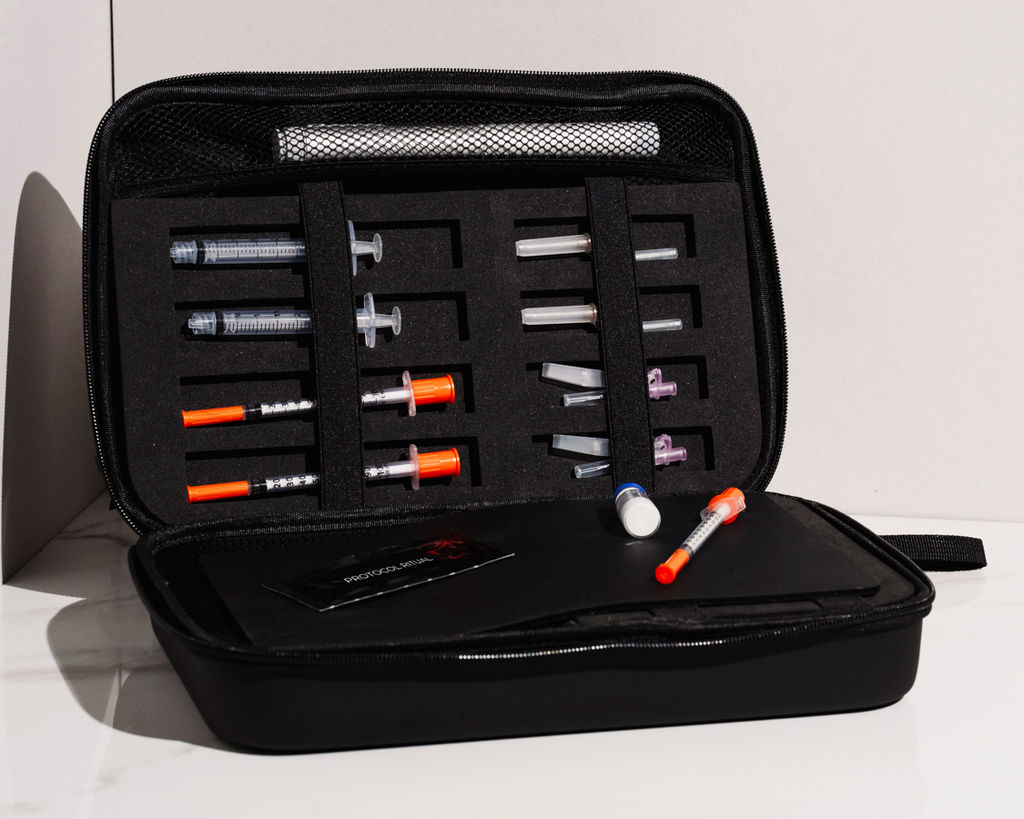
An injection station is more than a place to keep supplies. It is a complete, repeatable system for organizing and preparing for an at-home protocol. A well-designed home injection kit brings the essential parts of that system together, including discreet storage, a dedicated preparation surface, and the everyday supplies that support a consistent routine. Instead of searching through drawers, opening multiple containers, or preparing on a paper towel, you begin each session with everything where it belongs.
People who take their routines seriously often invest significant time, energy, and attention into their protocols, yet the physical setup around those protocols is usually an afterthought. Supplies end up in a ziplock bag, a bathroom drawer, a shipping box, or a collection of mismatched organizers. The process works, technically, but it never feels considered.
The Injection Station Method is a better approach. It turns a scattered collection of supplies into a defined ritual with a clear beginning, an orderly preparation process, and a proper reset when the routine is complete.
What Is an Injection Station?
An injection station is a dedicated organization and preparation system for people who self-administer prescribed injectable medications at home. It may support routines involving TRT, HRT, GLP-1 medications, fertility treatments, peptides prescribed by a medical professional, or other clinician-directed protocols.
The word “station” matters. A storage box simply holds objects. A station supports an entire process.
A complete injection station should help you:
- Keep routine supplies together
- Maintain a discreet and organized setup
- Create a dedicated preparation surface
- See what needs to be replenished
- Reduce unnecessary searching and setup
- Return everything to a consistent place afterward
The goal is not to add complexity. It is to remove the small points of friction that make a recurring routine feel more scattered than it needs to be.
Why Random Storage Is Not a Complete System
Most home injection setups develop gradually. A person receives medication, purchases the necessary supplies, and finds somewhere to put everything. There is rarely a moment when the entire process is intentionally designed.
That often leads to a familiar collection of compromises:
- Medication stored in one place
- Syringes or other prescribed supplies kept somewhere else
- Alcohol prep pads left in their original packaging
- A paper towel used as a makeshift work surface
- Empty wrappers accumulating during preparation
- Travel requiring everything to be repacked into another bag
Each individual compromise seems minor. Together, they create a routine that feels improvised every time.
A random drawer can store supplies, but it does not provide a dedicated preparation area. A ziplock bag can keep items together, but it does not create useful structure. A generic medical case may offer compartments, but it often feels bulky, clinical, or designed for a completely different user.
The Injection Station Method addresses the complete ritual, not only the storage problem.
The Four Parts of the Injection Station Method
A functional home setup has four distinct stages: store, prepare, complete, and reset. When each stage has a defined place within the system, the routine becomes easier to repeat.
1. Store Everything With Intention
Your primary supplies should have designated locations. You should not need to empty an entire bag to find one small item or wonder whether you have enough alcohol prep pads left for the week.
The storage portion of an injection station should be:
- Structured enough to prevent everything from becoming a loose pile
- Compact enough to fit naturally into your home
- Discreet enough to leave out or store without announcing its contents
- Durable enough for repeated daily or weekly use
- Flexible enough to support the supplies required by your individual protocol
Discretion is especially important. Many people do not want a case that looks like clinical equipment or displays medical branding. A premium injection station should blend into a home, office, gym bag, or luggage without drawing unnecessary attention.
Nothing on the outside needs to explain what is inside.
2. Establish a Dedicated Preparation Surface
Storage is only half of the setup. When it is time to begin the routine, the supplies have to come out of the case and go somewhere.
For many users, that somewhere is a bathroom counter, kitchen counter, desk, or paper towel. These surfaces may already contain toiletries, water, dust, grooming products, food residue, or everyday clutter. Even when the counter has just been cleared, the preparation area still feels temporary.
A real injection prep mat creates a defined workspace. It visually separates the routine from the surrounding counter and gives each item a clear place during preparation.
A purpose-built silicone prep mat should be:
- Large enough to create a useful workspace
- Weighted so it stays flat during use
- Foldable for compact storage
- Easy to wipe down according to its care instructions
- Neutral and premium in appearance
- Reserved specifically for the routine
The mat is one of the clearest differences between a supply case and a complete injection station. The case organizes what happens before and after. The mat supports the moment when the routine is actually taking place.
3. Keep Preparation Essentials Within Reach
A complete home injection kit should include the recurring nonprescription preparation supplies that fit the system, rather than forcing the user to assemble every detail separately.
Alcohol prep pads are a simple example. They are used regularly, easy to misplace, and often left in bulky retail packaging. Keeping them inside the station makes the setup more complete and helps users quickly see when the supply is running low.
Protocol Ritual includes custom-branded alcohol prep pads because the small details matter. The goal is not branding for its own sake. It is to create a cohesive experience from the moment the case opens to the moment the routine is complete.
Your medication, prescription supplies, dosing schedule, and clinical instructions should always come from your healthcare provider or pharmacist. The injection station does not replace medical guidance. It organizes the physical tools around the protocol you have already been prescribed.
4. Reset the Station After Every Use
A strong system is easy to restore.
Once your routine is complete, dispose of used sharps and other materials according to the instructions provided by your healthcare provider, pharmacist, product labeling, and local disposal requirements. Then return the remaining supplies to their designated places, wipe down the prep mat as directed, fold it, and close the case.
The station should be ready for the next session before you walk away.
This reset matters because organization is not something you should have to recreate each time. The benefit comes from maintaining a stable system. When everything is returned to the same place, your next routine begins without a search, a cleanup project, or a new decision about where to work.
What Belongs in a Home Injection Kit?
The exact contents will depend on the protocol prescribed to you, but the organizational framework is generally consistent.
A complete home injection setup may need space for:
- Prescribed medication or medication devices
- Syringes, pen needles, or other provider-directed supplies
- Alcohol prep pads
- A dedicated injection prep mat
- Adhesive bandages, when part of your routine
- Provider instructions or prescription information
- A personal tracking method, when recommended
- Unused supplies awaiting the next session
Used sharps should go directly into an appropriate sharps disposal container. They should not be stored loose inside the station or returned to the case after use.
The home injection kit itself should remain focused on organization and preparation. It should not become a catch-all for unrelated medication, grooming products, supplements, cables, or everyday household items. The more clearly defined the station remains, the more useful it becomes.
Choose a Consistent Location
An injection station works best when it has a home of its own.
Choose a location that is accessible during your routine but protected from children, pets, moisture, excessive heat, and other conditions that may be inappropriate for your prescribed supplies. Follow the storage instructions supplied with your medication, as some products may require refrigeration or other specific conditions.
The station does not override those requirements. Its role is to organize the supplies that can appropriately be kept within it and to support preparation when it is time to follow your prescribed routine.
A consistent location also helps prevent supplies from spreading throughout the house. Rather than keeping alcohol prep pads in one room, syringes in another, and the case in a closet, you maintain one central system.
Build the Station Around the Sequence You Follow
The best organization is based on use, not appearance alone.
Place the items you reach for first where they are easiest to access. Keep frequently used supplies visible. Separate small items so they do not fall beneath larger packaging. Avoid filling every available space simply because it exists.
Think through your actual sequence:
- Open the case.
- Remove and unfold the preparation mat.
- Take out the supplies required for that session.
- Follow the preparation and administration instructions provided by your healthcare professional.
- Dispose of used materials appropriately.
- Return unused supplies.
- Clean and fold the mat.
- Close and store the station.
A well-designed setup supports that sequence without requiring you to rearrange the entire case each time.
The Difference Between an Injection Station and an Organizer
An organizer solves one problem: where to put things.
An injection station solves a broader problem: how to support the complete routine from storage through preparation and reset.
A basic organizer may offer pockets, dividers, or elastic loops. Those features can be useful, but they still leave the user to find a work surface, gather preparation supplies, and build a process around the case.
A complete station brings the pieces together:
- A discreet premium case for organization
- A weighted silicone mat for preparation
- Alcohol prep pads for routine use
- A layout designed around recurring self-injection protocols
- A consistent system that can be reset after every session
This is why the standard should be a system, not a box.
Why the Physical Setup Matters
When something becomes part of your daily or weekly life, the quality of the setup affects how the routine feels.
People already understand this in other areas. Coffee drinkers create dedicated coffee stations. Athletes organize training gear. Professionals invest in workspaces that reduce friction. Travelers use packing systems because loose items create unnecessary disorder.
A home injection routine deserves the same level of consideration.
That does not mean the setup needs to be elaborate. It means it should be intentional. You should have a defined place for the supplies, a real surface for preparation, and a clear way to put everything away.
The physical environment should reflect the seriousness with which you approach the protocol.
A Better Standard for Daily Protocol
Protocol Ritual was built for people who are tired of pretending that a messy setup is good enough.
Another commodity bag or generic storage box was not needed; instead, a system that acknowledged the complete experience. The case had to be discreet. The mat had to feel substantial and stay in place. The alcohol prep pads had to be included. Every part had to work together without making the routine feel more clinical than it already does.
The result is an injection station designed for adults who value order, privacy, consistency, and considered design.
This is not about displaying your protocol. It is about creating a better structure around something you already take seriously.
Frequently Asked Questions
What is an injection station?
An injection station is a dedicated system for storing, organizing, preparing, and resetting the supplies used in a prescribed home injection routine.
What should a home injection kit include?
A complete kit should include discreet organization, a dedicated preparation surface, and room for the supplies required by your individual protocol. Protocol Ritual also includes custom-branded alcohol prep pads.
Is an injection station the same as a medication case?
No. A medication case primarily provides storage. An injection station supports the broader routine, including organization, preparation, and post-routine reset.
Can I store my medication inside the case?
Only store medication according to its labeling and the instructions provided by your healthcare provider or pharmacist. Some medications require refrigeration or other specific conditions.
Why use an injection prep mat?
A prep mat creates a defined work surface for organizing supplies during the routine. A weighted silicone mat also stays flatter and feels more substantial than a disposable paper towel.
Is Protocol Ritual intended for one type of protocol?
Protocol Ritual is designed to organize supplies for a range of prescribed at-home routines, including TRT, HRT, GLP-1, IVF, peptide, and other self-injection protocols. Users should always follow their own provider’s instructions.
Does the kit include medication or prescription supplies?
No. Medication, syringes, pen needles, and other prescription-specific supplies should come from an authorized healthcare provider, pharmacy, or approved medical supplier.
Where should used needles be stored?
Used needles should be placed directly into an appropriate sharps disposal container and handled according to local requirements and professional guidance. They should never be returned loose to the injection station.
Build a Better Ritual With Protocol Ritual
Your protocol already demands consistency. The tools around it should meet the same standard.
Protocol Ritual brings together a discreet premium case, a real weighted silicone prep mat, and custom-branded alcohol prep pads in the first all-in-one system designed to support the ritual from start to finish. No more ziplock bag. No more drawer pile. No more paper towel pretending to be a proper setup.
Join the launch at Protocol Ritual and be among the first to experience a better standard for your daily or weekly protocol.