

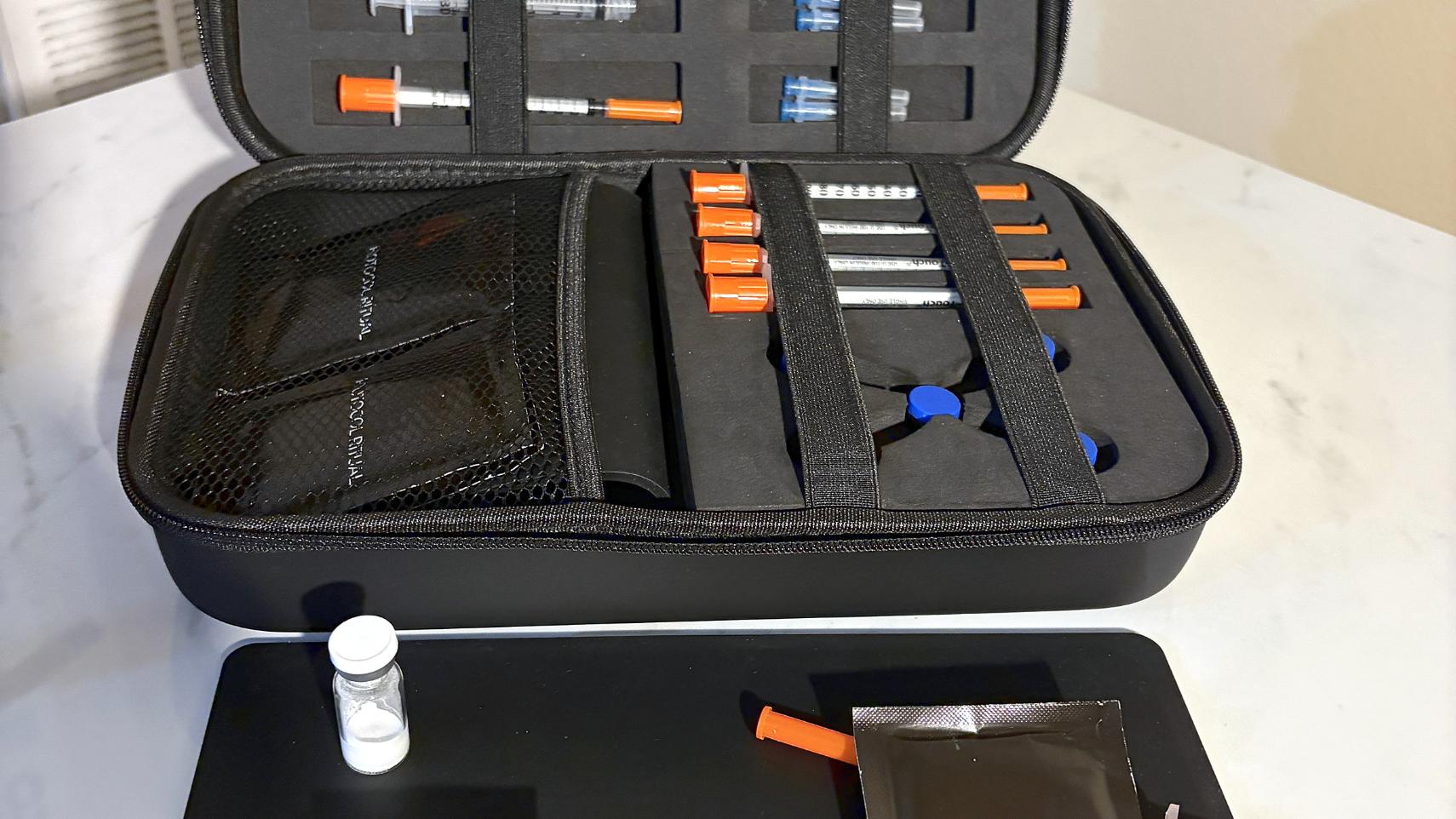
At-home injection routines have become part of everyday life for a growing number of adults managing prescribed GLP-1, TRT, peptide, HRT, fertility, and other injectable protocols. As these routines move from clinics into homes, people are discovering that the medication is only one part of the experience. They also need a reliable way to organize pens, vials, syringes, alcohol prep pads, documentation, and other approved supplies. A purpose-built GLP-1 supplies organizer can help turn a scattered collection of items into a discreet, orderly system that is easier to maintain from one routine to the next. Protocol Ritual’s target customer is not simply looking for another storage box. They are looking for a complete preparation system that reflects the seriousness and consistency of their routine.
The Shift From Clinical Appointments to Home Routines
For years, many injectable protocols were associated primarily with medical offices, pharmacies, and clinical settings. Today, prescribed at-home routines are increasingly familiar. Telehealth services, direct communication with care teams, and broader access to self-administered treatment plans have changed, where many people complete their routines.
That shift has created a practical gap.
A provider or pharmacist may explain how a prescribed product should be handled, but the surrounding home setup is often left to the individual. People return home and begin assembling their own systems from whatever is available:
- A plastic bag for unopened supplies
- A bathroom drawer for alcohol prep pads
- A kitchen counter used as a temporary preparation area
- A shipping box for extra components
- A loose pouch for travel
- A paper towel used as a makeshift work surface
These solutions may function temporarily, but they rarely create a routine that feels organized, discreet, or intentional. Over time, the lack of a dedicated system can become frustrating. Supplies migrate between rooms. Packaging accumulates. Frequently used items become separated from backup items. Travel requires rebuilding the setup from scratch.
The need is no longer unusual. At-home injectable routines are becoming normal, and the tools surrounding them need to catch up.
Why Organization Matters in a Repeating Routine
A repeating routine becomes easier to manage when every item has a predictable place. This is not about changing medical instructions or adding steps to a prescribed process. It is about creating order around the nonclinical parts of the experience.
An organized system can help users:
- See which general supplies are available
- Keep frequently used accessories together
- Separate routine items from unrelated household products
- Prepare a consistent workspace
- Pack more deliberately for travel
- Return everything to the same place afterward
Consistency reduces the need to search through cabinets, bags, and drawers each time. Instead of rebuilding the environment for every routine, the user can open a dedicated case, set out a prep mat, and arrange the supplies required under their provider’s instructions.
This distinction is important. A supplies organizer does not replace professional guidance. It does not determine which items someone should use, how they should use them, or how a prescribed product should be stored. It simply gives the approved supplies surrounding the routine a defined home.
The Difference Between a Container and a System
Many people begin with a container. It may be a toiletry bag, plastic bin, cosmetic case, pencil pouch, or repurposed shipping box. A container can hold objects, but holding objects is not the same as supporting a complete routine.
A well-designed system considers the sequence around the experience:
- Storing general supplies between uses
- Moving the setup to an appropriate preparation area
- Creating a defined surface for arranging items
- Keeping commonly used accessories accessible
- Packing the system away discreetly
- Transporting it when travel is necessary
This is why the concept of an injection station matters. The goal is not to turn a home into a medical environment. The goal is to create a compact, repeatable setup that appears when it is needed and disappears when it is not.
A premium case can organize the contents. A weighted preparation mat can define the work area. Alcohol prep pads can remain with the rest of the routine instead of being stored in a separate cabinet. Together, these elements create a system rather than a miscellaneous collection of supplies.
What Belongs in a GLP-1 Supplies Organizer?
The contents of any organizer should be based on the user’s specific prescription, product instructions, and guidance from a qualified healthcare professional or pharmacist. There is no universal packing list for every person or every injectable product.
However, a general organization system may include space for items such as:
- Prescribed pens or vials, when appropriate for the case and storage requirements
- Compatible administration supplies provided or approved for the routine
- Alcohol prep pads
- Adhesive bandages, when personally used
- Printed prescription information
- Travel documentation
- Backup general supplies
- A dedicated preparation mat
- A small personal checklist
- Manufacturer instructions or pharmacy materials
Not every user will need every item. Some prescribed products are self-contained pens, while other routines may involve separate components. The purpose of an organizer is not to prescribe a standard setup. It is to help each person arrange the supplies their care team has already instructed them to use.
A Dedicated Prep Surface Creates a Clearer Routine
One of the most overlooked parts of an at-home setup is the preparation surface. People often use whatever space happens to be available, including countertops, desks, nightstands, or tables shared with unrelated household activities.
A dedicated prep mat helps visually separate the routine from the surrounding environment. It creates a defined area where approved supplies can be placed during preparation. When the routine is complete, the mat can be cleaned according to its care instructions and stored with the rest of the system.
A weighted mat is especially useful because it is designed to stay in place rather than sliding, curling, or shifting as items are arranged. It also creates a more polished experience than a disposable paper towel or an improvised surface.
The mat is not a sterile field, and it should never be represented as one. It does not replace hand hygiene, product instructions, environmental cleanliness, or guidance from a healthcare professional. Its role is organizational. It gives the routine a consistent physical boundary and helps the user avoid scattering supplies across a larger surface.
Discretion Is Part of Good Design
At-home routines may be normal, but they are still personal. Many users do not want their supplies displayed on a bathroom counter, visible in a shared refrigerator, or stored in packaging that announces what is inside.
A discreet organizer respects that preference.
Good discretion is not about embarrassment or secrecy. It is about giving people control over how their personal routine appears in their home, luggage, office, or shared space. A case should look intentional and premium without resembling disposable medical packaging or a brightly labeled clinical bag.
Discretion is particularly valuable for people who:
- Live with roommates
- Share a bathroom or kitchen
- Travel frequently
- Carry supplies between locations
- Prefer a clean, minimal home environment
- Do not want visitors to immediately identify the contents of a case
When the exterior is understated, and the interior is organized, the system can remain accessible without becoming visually intrusive.
Storage Requirements Still Come From the Product Instructions
Organization and temperature-controlled storage are separate considerations. Some prescribed injectable products have specific storage-temperature requirements. Others may have different rules before first use, after first use, or during travel.
Users should always follow the current manufacturer instructions, pharmacy labeling, and guidance from their provider or pharmacist. Storage requirements can vary by product, packaging, and condition of use.
The current Protocol Ritual case does not include a cooling or cold-chain system. It should not be used as a substitute for a refrigerator, insulated medication cooler, approved cold pack configuration, or any other temperature-management method recommended for a particular product. A future cooling accessory is being tested, but it is not part of the current case.
The case is designed for organization, preparation, discretion, and transport of appropriate supplies. When temperature control is required, users need a separate solution that complies with the instructions for their prescribed product.
Travel Makes a Dedicated System Even More Valuable
Travel often reveals the weaknesses in an improvised home setup. Supplies that normally live in three different drawers must suddenly fit into one bag. Documentation may be difficult to locate. Small accessories can disappear into luggage. Temperature-sensitive products may require a separate, compliant cooling method.
A dedicated organizer helps users prepare more deliberately. Before leaving, they can review the contents, remove unnecessary household items, and confirm that the general supplies they intend to carry are together.
A travel-ready routine may involve:
- Keeping medication in its original labeled packaging when appropriate
- Carrying prescription or pharmacy documentation
- Reviewing current transportation-security guidance
- Confirming destination-specific rules
- Separating temperature-management equipment from the organizational case
- Packing enough approved supplies for the planned period
- Identifying an appropriate sharps-disposal option
- Keeping essential items accessible rather than buried in checked luggage
Rules can vary by destination, carrier, product, and jurisdiction. Travelers should verify current requirements with the relevant transportation authority, airline, provider, pharmacist, and destination before departure.
The organizer supports the packing process. It does not override travel regulations or product-specific storage instructions.
The New Standard Is Intentional, Not Improvised
The growing number of at-home routines has created a new consumer category. People are no longer satisfied with treating the surrounding experience as an afterthought. They want the same level of order, design, and quality they expect from other parts of their daily lives.
That means moving beyond:
- Loose supplies in a drawer
- Generic plastic containers
- Paper towels as prep surfaces
- Multiple unrelated pouches
- Visible pharmacy packaging
- Repacking the entire routine before every trip
A better standard begins with intention. The supplies have a dedicated location. The preparation area is clearly defined. The system can be packed away when it is not in use. The exterior is discreet. The interior supports the user’s established routine without pretending to provide medical direction.
This is the natural next step for a category that has moved into the home.
Building a Routine That Is Easier to Maintain
The best organizational systems are simple enough to repeat. A complicated arrangement with too many compartments, labels, or unnecessary accessories can become another source of friction.
A practical routine may follow a straightforward pattern:
- Keep approved supplies together between uses
- Review the contents regularly
- Remove empty packaging and expired general accessories
- Set up the preparation mat in an appropriate location
- Arrange only the items needed for that routine
- Follow provider, pharmacist, and manufacturer instructions
- Dispose of used sharps through an appropriate approved method
- Clean and return reusable organizational items
- Close and store the system discreetly
The medical steps remain governed by professional instructions. The organizational steps make the surrounding environment easier to manage.
Frequently Asked Questions
What is a GLP-1 supplies organizer?
A GLP-1 supplies organizer is a case or system designed to keep prescribed medication accessories, alcohol prep pads, documentation, and other approved routine items together. It does not provide medical guidance or replace product-specific storage instructions.
Does the Protocol Ritual case keep medication cold?
No. The current Protocol Ritual case does not include insulation, active cooling, cold packs, or a cold-chain system. Temperature-sensitive products require a separate storage or travel solution that follows manufacturer and pharmacy guidance.
Can one organizer be used for different at-home protocols?
Potentially, depending on the size and type of the supplies. Users should organize only items that belong to their prescribed routine and confirm that all medication storage requirements are met separately.
Why use a preparation mat?
A preparation mat creates a defined surface for arranging approved supplies. It supports organization and consistency, but it is not sterile and does not replace cleaning practices or professional instructions.
Should medication remain in its original packaging during travel?
Original labeled packaging can be helpful for identification and documentation. Travelers should confirm current requirements with transportation authorities, airlines, their provider, and their pharmacist.
Can used needles be stored in the organizer?
Used sharps should be placed in an appropriate sharps container and handled according to local disposal rules. They should not be returned loose to the organizational case.
Is an at-home injection organizer a medical device?
A general supplies organizer is intended to arrange and transport appropriate items. It does not administer medication, provide dosing information, or replace a provider’s instructions.
How often should the organizer be reviewed?
Users may find it helpful to review the contents regularly, remove unnecessary packaging, check general supply levels, and confirm that medications and accessories are being handled according to current instructions.
Create a Better Standard for Your Daily Protocol
At-home injection routines are no longer an exception. For many people, they are a regular part of life, and the tools surrounding them should feel considered rather than improvised.
Protocol Ritual was built for people who take their routine seriously and want the tools around it to reflect that. We are here for daily users who are tired of piecing together a process from random supplies and are tired of pretending that messy setups are good enough.
With a discreet premium case, a real weighted prep mat, and custom-branded alcohol prep pads included, Protocol Ritual is the first all-in-one kit designed to support the full ritual from start to finish. Join the launch and be first to experience a better standard for daily protocol.