

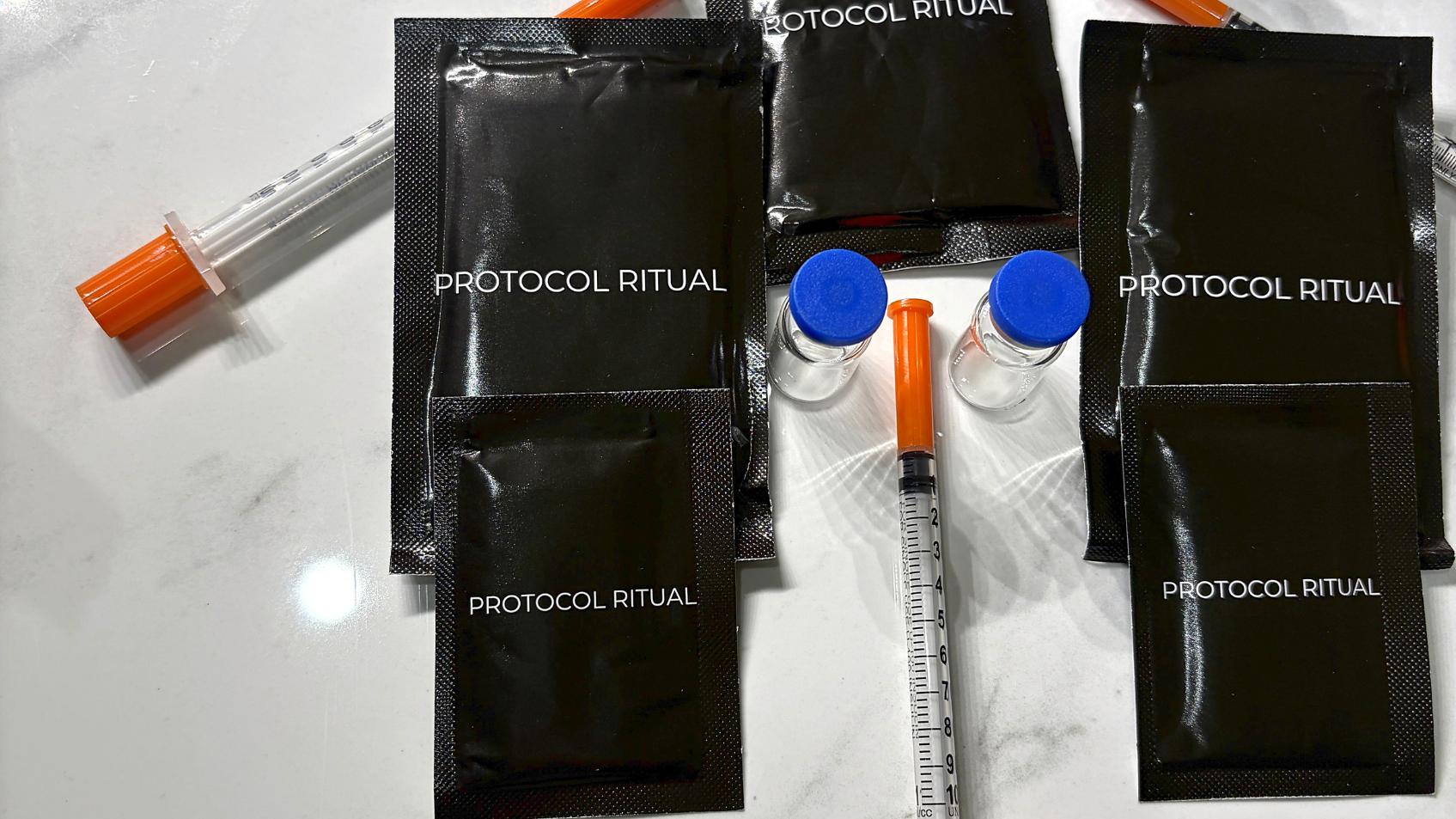
Knowing how to dispose of needles at home protects you, the people in your household, sanitation workers, and recycling-facility employees. Place each used needle or other sharp in an appropriate sharps container immediately after use, keep the container away from children and pets, and follow the disposal requirements in your state and community.
The Three Most Important Sharps-Disposal Rules
Contain sharps immediately. Place used needles, syringes, lancets, auto-injectors with exposed needles, and other sharps into an appropriate container as soon as you finish using them.
Never recycle sharps. Do not place loose sharps or filled sharps containers in a household recycling bin.
Check local requirements. A disposal method that is permitted in one community may be prohibited in another. Confirm the rules where you live before placing a sealed container in household trash.
Why Home Sharps Disposal Requires a Plan
A prescription usually explains when and how to use a medication. It may not provide much practical guidance about managing the supplies and waste that accumulate at home.
That leaves many people trying to develop their own routine. New syringes may stay in pharmacy bags, medication boxes may be stored in different rooms, and used sharps may be set aside temporarily because no disposal container is nearby.
Sharps should never be left loose on a counter, in a drawer, or in a household trash can. The safest routine begins before the injection: choose the place where you will prepare your supplies and keep an appropriate sharps container within reach.
The FDA recommends placing used needles and other sharps in a sharps-disposal container immediately after use. Prompt containment reduces the chance that a loose needle will cause a puncture or cut.
What Counts as a Sharp?
“Sharps” is a broad term for medical items capable of cutting or puncturing skin. Common household sharps include:
- Hypodermic needles
- Syringes with attached needles
- Pen needles
- Lancets
- Infusion-set needles
- Auto-injectors with exposed or retractable needles
- Other medication-delivery devices containing a sharp component
Do not assume that a device is safe for ordinary trash merely because its needle retracts or is difficult to see. Follow the disposal instructions supplied with that particular device.
Risks of Improper Sharps Disposal
Loose needles can injure anyone who handles household waste. That may include family members, housekeepers, maintenance workers, waste collectors, and employees at recycling facilities.
A needle may puncture a trash bag or become exposed when waste is compressed or sorted. The EPA warns that improperly discarded needles can cause needlestick injuries and potential exposure to infection, particularly when containers break open in garbage trucks or when sharps are mistakenly sent to recycling facilities.
The risk is not limited to needles used for a particular medical condition. A used veterinary needle, lancet, pen needle, or injection needle should receive the same careful handling.
Choosing a Sharps Container
FDA-Cleared Sharps Containers
An FDA-cleared sharps container is the preferred option. These containers are specifically designed to hold used needles and other sharps.
They generally have:
- Puncture-resistant plastic
- Leak-resistant sides and bottom
- A tight-fitting, puncture-resistant lid
- An opening designed for safe sharps disposal
- Labels identifying the container’s purpose
Sharps containers are commonly available through pharmacies, healthcare providers, medical-supply companies, and online retailers. Availability varies, so it may be helpful to obtain the container before beginning a home-injection prescription.
Heavy-Duty Household Containers
When an FDA-cleared container is not available, the FDA says a heavy-duty plastic household container, such as a liquid laundry-detergent bottle, may be used as an alternative. Local disposal rules still apply.
A household container should be:
- Made from heavy-duty, puncture-resistant plastic
- Able to stand upright without tipping
- Leak resistant
- Fitted with a secure, tight-fitting lid
- Clearly labeled to warn that it contains sharps
Before using it, write “CONTAINS SHARPS” and “DO NOT RECYCLE” clearly on the outside. Marking more than one side can help keep the warning visible during handling.
Containers You Should Not Use
Avoid containers that are thin, breakable, easy to open, or likely to be mistaken for ordinary recycling. Examples include:
- Milk jugs
- Soda and water bottles
- Glass jars
- Aluminum cans
- Cardboard boxes
- Plastic bags
- Food-storage containers with snap-on lids
A container that appears adequate while sitting on a shelf may not remain secure while being carried, dropped, or handled as waste.
How to Make a Temporary Household Sharps Container
When local guidance allows a heavy-duty household container, follow these steps.
1. Select an Appropriate Bottle
Choose a thick, rigid plastic bottle with a stable base and screw-on cap. A liquid laundry detergent bottle is a commonly recommended example.
Do not use a bleach container unless it has been completely emptied and handled according to the product’s safety directions. Never mix medical waste with residual household chemicals.
2. Label the Container
Before adding any sharps, write:
CONTAINS SHARPS — DO NOT RECYCLE
Use a permanent marker and make the warning large enough to read easily.
3. Keep the Container Upright
Store it on a stable surface where it will not tip over. Keep it away from children, pets, food-preparation areas, and ordinary household waste.
4. Keep the Lid Available
Do not lose or discard the original screw-on lid. You will need it to close the container securely when it is ready for disposal.
5. Treat It as a Disposal Container
Once the bottle contains a sharp, do not reuse it for another purpose. Never empty the sharps into a different container.
Step-by-Step Needle Disposal at Home
Step 1: Prepare the Container Before the Injection
Place the sharps container close to the area where you will use the needle. It should be within easy reach but positioned where it cannot be knocked over.
Having the container ready prevents you from carrying an exposed sharp across the room or setting it down temporarily.
Step 2: Place the Used Sharp Directly Into the Container
Immediately after use, place the entire sharp into the container according to the instructions for your device and container.
The FDA advises users not to bend, break, or recap used needles. Do not attempt to remove a needle manually unless the medication or device instructions specifically require removal and explain how to do it safely.
Step 3: Do Not Reach Into the Container
Never put your fingers or hands inside a sharps container. Do not attempt to reposition, compress, or retrieve anything after it has been dropped inside.
Step 4: Monitor the Fill Line
Purpose-built containers normally have a marked fill line. Stop using the container when it reaches that line.
For a household substitute without a marked line, do not fill it to the top. Leave enough room to close the lid without pushing down on the contents.
Step 5: Close the Container Securely
Follow the container manufacturer’s closure instructions. For an approved household substitute, screw the cap on tightly. Local guidance may also direct you to reinforce the lid with heavy-duty tape.
Do not attempt to reopen the container after it has been sealed.
Step 6: Use an Approved Local Disposal Method
Possible options include:
- Pharmacy or healthcare-facility collection programs
- Community drop boxes
- Household hazardous-waste facilities
- Scheduled collection events
- Mail-back programs
- Residential special-waste pickup
- Household trash, but only where expressly permitted
The FDA and EPA recommend checking local disposal rules because available programs and legal requirements differ by location.
Never Place Sharps in Recycling
Sharps do not belong in recycling bins, even when they are inside a sealed plastic bottle.
Recycling facilities may use mechanical and manual sorting. A detergent bottle containing needles may look like an ordinary recyclable container, creating a risk for workers who handle it.
Labeling a household sharps container “DO NOT RECYCLE” is important, but the label does not make the recycling bin an acceptable disposal route. Keep all sharps and sharps containers out of recycling.
Do Not Flush Needles
Never flush needles, syringes, lancets, or pen needles down a toilet.
Wastewater systems are not a sharps-disposal pathway. Flushing moves the hazard out of the home without eliminating it and may expose utility or maintenance personnel.
State and Local Disposal Requirements
There is no single disposal method that applies uniformly to every U.S. household. State and local agencies determine what residents may do with home-generated sharps.
The safest approach is to:
- Visit your state health or environmental agency’s website.
- Check the Safe Needle Disposal locator using your ZIP code.
- Contact your city or county waste department.
- Call a prospective drop-off location before traveling there.
- Confirm whether the site accepts your type of sharps container.
State law may establish a baseline, while a city, county, waste hauler, or collection facility may have additional instructions.
California
California law prohibits placing home-generated sharps in household trash or recycling containers. Residents must use an authorized disposal option, such as an approved collection point or mail-back program.
New York
New York requires hospitals and nursing homes to accept properly contained household sharps as a free community service. Residents should call ahead to confirm hours, the drop-off location, and packaging requirements.
Texas
The Texas Commission on Environmental Quality publishes instructions for disposing of household-generated syringes and sharps. Residents should follow that guidance and check whether their city, county, waste provider, or collection facility has additional requirements.
How to Dispose of Injection Pens
Injection pens do not all work the same way. Disposal depends on whether the product has:
- A removable pen needle
- A built-in needle
- A retractable needle
- Multiple doses
- A single-use or reusable pen body
Follow the manufacturer’s current Instructions for Use for your exact medication and presentation.
When a pen uses a removable needle, the instructions may require removing the pen needle after each injection and placing it in an appropriate sharps container. Use the supplied outer needle cap or removal method exactly as directed. Do not improvise.
Some single-use pens must be placed in a sharps container as an entire unit. Others may have separate instructions for the pen body after the needle has been removed. Do not assume that the disposal instructions for one GLP-1, insulin, fertility, peptide, or hormone-injection device apply to another.
Ask your pharmacist or healthcare provider when the device instructions are unclear.
What to Do After an Accidental Needlestick
An accidental needlestick should be taken seriously, particularly when the sharp was used by another person, or its source is unknown.
Immediately After the Injury
- Wash the affected area with soap and water.
- Do not aggressively squeeze, scrub, or damage the wound.
- Note when the injury occurred and what type of sharp caused it.
- Seek prompt medical advice.
Tell the healthcare professional whether the needle was used, who used it if known, and whether there may have been exposure to blood.
For a possible HIV exposure, CDC guidance says PEP must be started within 72 hours and should be evaluated as soon as possible. A healthcare professional determines whether the exposure presents enough risk to warrant treatment.
A puncture from your own needle may have a different infection risk from a puncture involving another person’s blood, but it can still cause injury or introduce bacteria. Contact a healthcare professional when you are uncertain.
Frequently Asked Questions
Can I Take Used Needles to CVS or Walgreens?
Programs vary by pharmacy, state, and individual location. Some pharmacies offer collection kiosks, sell sharps containers, or provide mail-back products, while others do not accept filled containers.
Call the specific store before visiting. Ask what types of sharps it accepts, what container is required, whether a fee applies, and when collection services are available.
Can I Use a Milk Jug or Soda Bottle?
No. These containers are generally too thin and may be punctured, crushed, or opened accidentally.
When an FDA-cleared container is unavailable, use a heavy-duty plastic container that meets FDA recommendations and is allowed by your local disposal authority. A liquid laundry-detergent bottle is a commonly cited alternative.
What Should I Do When My Sharps Container Is Full?
Stop adding sharps when the container reaches its marked fill line. Close it according to the manufacturer’s directions and use a disposal method approved in your community.
Do not force additional needles into the opening, shake the container, press the contents down, or transfer them to another container.
Are Home-Generated Sharps Hazardous Waste?
The legal classification varies. Household sharps are not handled under one uniform nationwide disposal program. States and local governments may regulate or describe them differently and may prescribe different collection methods.
Check the rules for your address rather than relying on a general national statement.
How Should I Dispose of Veterinary Needles?
Needles used to give medication to pets or other animals should be placed in a suitable sharps container immediately after use.
Ask your veterinarian whether the clinic accepts filled containers. If it does not, follow the same state and local household-sharps rules that apply to other needles generated in your home.
Can I Throw a Sealed Sharps Container in the Trash?
Only when state and local rules expressly allow it.
Some jurisdictions permit a sealed, labeled, puncture-resistant container in household trash. Others prohibit this practice and require a drop-off or mail-back option. Never place the container in recycling.
Create a Consistent Home-Injection Routine
Safe sharps disposal works best when it is part of a repeatable setup rather than something handled after supplies begin accumulating.
Keep unused supplies organized. Prepare injections on a clean, dedicated surface. Place the sharps container within reach before beginning. Contain each sharp immediately and identify a lawful disposal option before the container is full.
A reliable system reduces clutter, protects privacy, and keeps used sharps from being left where another person could encounter them.
Explore Protocol Ritual Systems
Protocol Ritual creates home-health organization systems for people managing injection supplies and medication routines. Purpose-built cases, preparation surfaces, and organization resources can help keep supplies orderly and discreet while supporting a consistent home routine.
Always follow the instructions provided with your medication and device. Questions about injection technique, medication use, or clinical safety should be directed to your healthcare provider or pharmacist.