The Cold Pod.
Cold. Logged.
A refrigerated travel case with your mark engraved on the lid. Freeze the pouches overnight, zip, go: eight hours inside 2–8 °C at room temperature, nothing to charge, nothing to declare at security.
- 8 h in range at room temperature, logged every minute
- No batteries, no cords, no watt-hour limits
- Your sample in your hand before anything is made
Why not a gel pack
The CDC’s guidance for transporting refrigerated vaccines says three things. The Cold Pod is built to all three.
“Do not use frozen gel packs or coolant packs from original vaccine shipments to pack refrigerated vaccines.”
Cold Pod: no ice, no gel. Four pouches of phase-change material that melt at +5 °C, inside the 2–8 °C range, where ice melts at 0 °C.
“PCMs between 4°C and 5°C (39°F and 41°F) can also be purchased to maintain proper temperatures.”
Cold Pod: that material, set to +5 °C, 400 g per case, organically made and sourced domestically. Recharged overnight in any household freezer.
Each transport container needs its own temperature monitoring device, preferably a digital data logger placed with the vaccines.
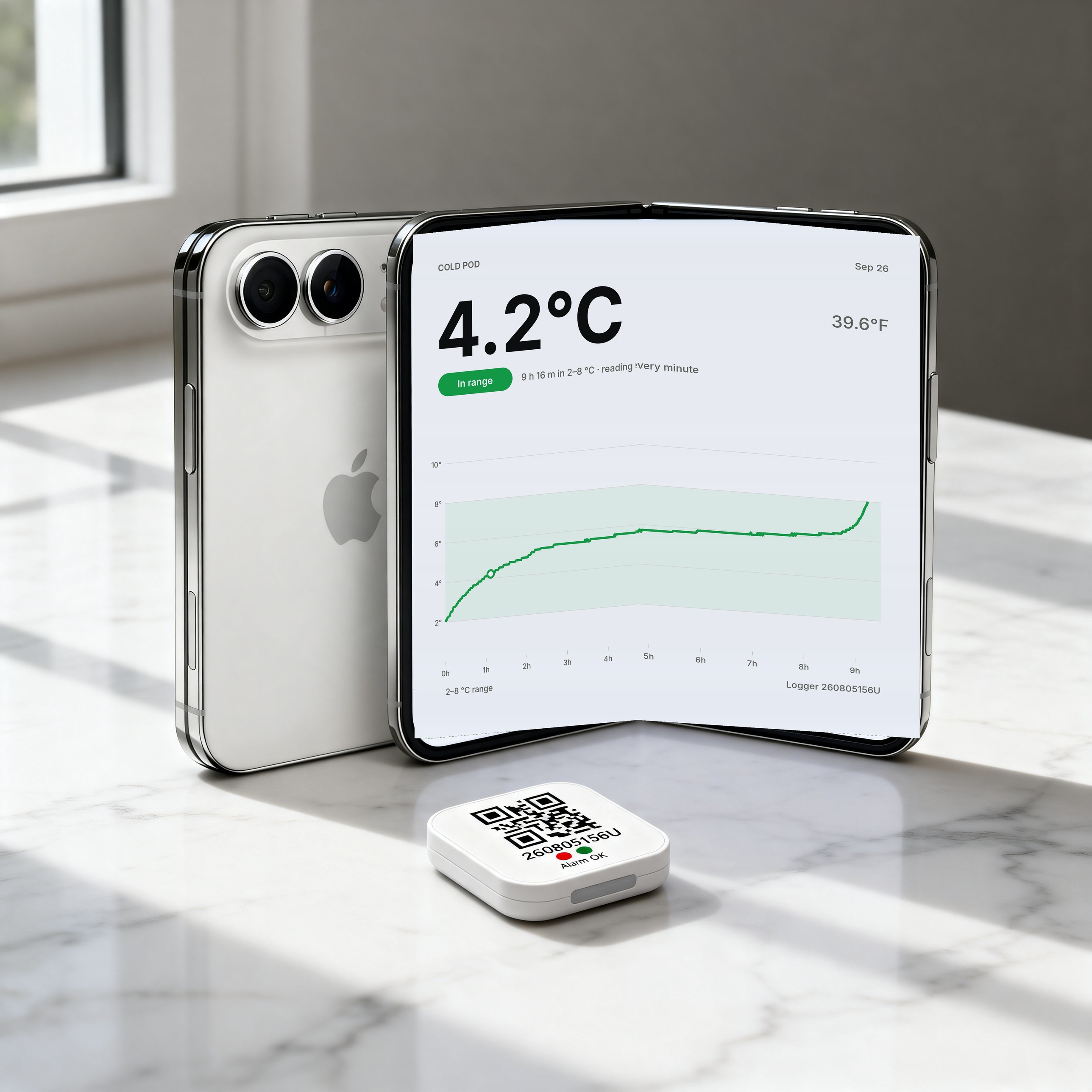
Cold Pod: a Bluetooth logger in the tray, one reading a minute, read on the patient’s phone. The lid readout is for a glance; the log is the record.
Cardinal Health, one of the three largest pharmaceutical distributors in the United States, replaced the gel packs in the reusable totes it uses to deliver refrigerated pharmaceuticals to retail and independent pharmacies with plant-based phase-change material: one pack to stop the product warming past 46 °F, one to stop it freezing. The Reusable Packaging Association gave it the 2016 Excellence in Reusable Packaging award. (Healthcare Packaging)
Quoted from the CDC Vaccine Storage and Handling Toolkit, Section Six, coolants and temperature monitoring for transport (cdc.gov). The Accreditation Commission for Health Care’s shipping-validation guidance for pharmacies likewise specifies validating “the phase-change material start temperature” and its weight, under USP <1079> (achc.org). The Cold Pod is a storage and travel case, not a medical device; we cite the guidance, we do not claim it.
The Cold Pod
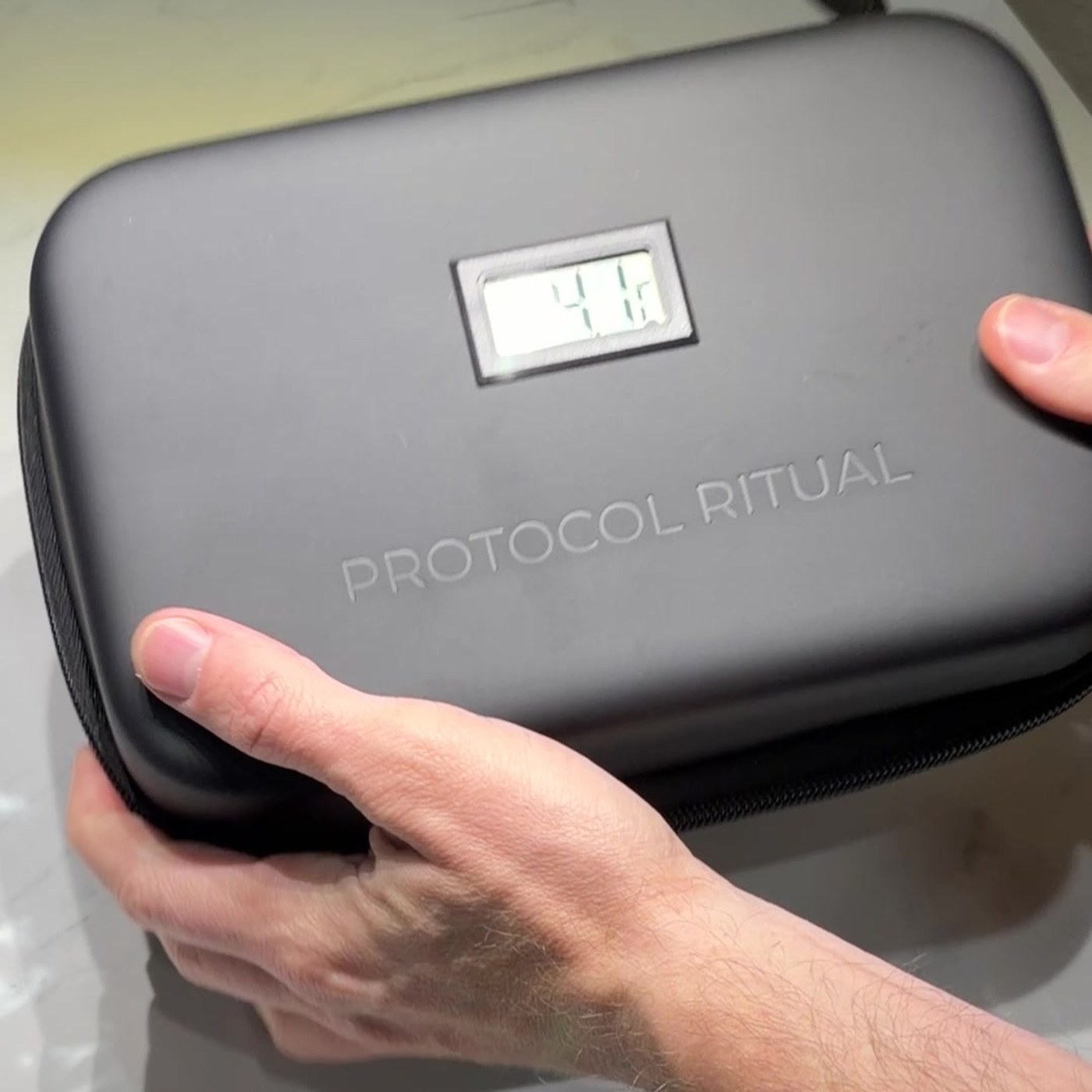
A hardshell, zip-closed case that fits a carry-on. Engraved lid, printed pouches, a tray cut to the vials you dispense. You hold your own sample before anything is made.
The case as it ships.
Unzip, open, logger out, close, lift. The lid reads 4.1 °C at the end because the pouches were charged overnight in a kitchen freezer. Nothing staged, nothing rendered.
Tap to play. Silent. Loads only when you press play.
Four pouches, two sides
Two 100 g pouches under the tray and two in the lid, so the vials sit in a sandwich of +5 °C material. Recharge overnight in any household freezer.
A tray cut to your vials
You tell us what you dispense; the pockets are cut to it, with a slot for the logger. You sign off the drawing, then hold your own sample before anything is made.
Logged to the phone
The lid readout is for a glance. The logger inside reads every minute, and the patient sees the whole trip in a free app: the line, the 2–8 °C band, mean kinetic temperature, a PDF if anyone asks. Nobody else hands the patient that.
Your mark on it
Drop your logo on the Cold Pod lid. This is a preview, not the finished unit. Your own sample reaches you before anything is made.
Nothing you upload leaves your browser. The preview is built on your screen and goes nowhere unless you download it.