Can a clinic put its own brand on injection supplies?
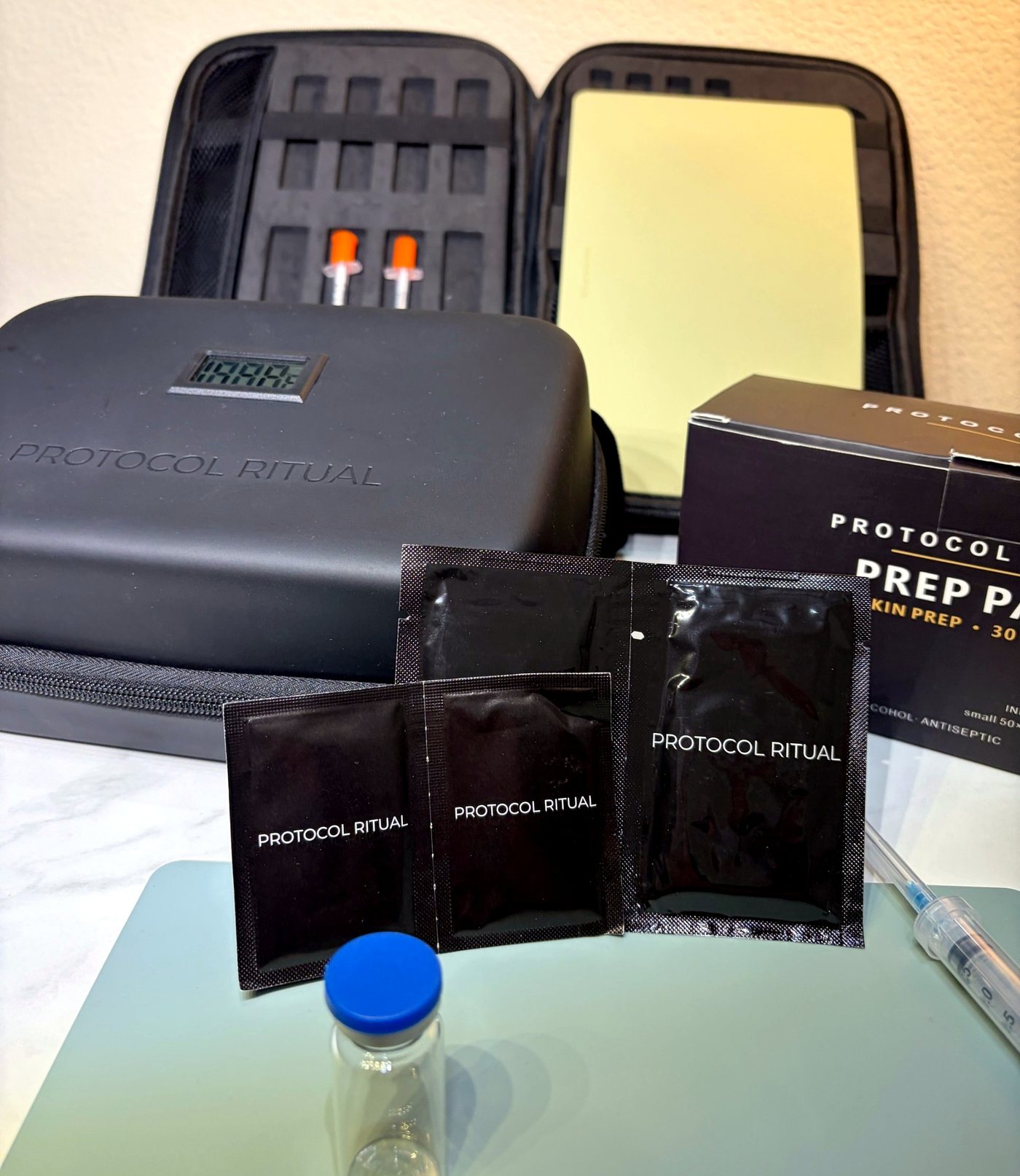
Yes. Every piece a patient takes home from a clinic can carry the clinic's own mark: the travel case, the reconstitution mat, the alcohol prep pads, the cold-chain case and the box they arrive in. This is usually called white-label or custom-branded supply. The clinic sends a logo; the supplier handles the rest.
This post covers what a clinic's mark can go on, how a proof works, and what separates a branded kit from a bag of stock supplies.
Why a clinic would want its name on the supplies
A patient on an injectable protocol goes home with a vial or pen, a syringe, and whatever the pharmacy threw in the bag. The pads are one brand, the sharps container another, the cooler is a lunch bag. None of it says where the care came from.
A branded kit changes that. The patient opens the same case every week, with the clinic's name on the lid, and every dose starts the same way: the mat goes down, a pad opens, the vial comes out of the cold. The clinic shows up in the patient's routine without saying a word.
For the clinic it also solves an operations problem. One supplier, one delivery, one set of proofs, instead of six vendor accounts and a storeroom of mismatched boxes.
What each surface can carry
- Hardshell travel case. The lid is engraved or debossed with the clinic's mark. Inside, the tray is cut to what the clinic dispenses: upright cutouts for vials, slots for syringes and needles, mesh for pads.
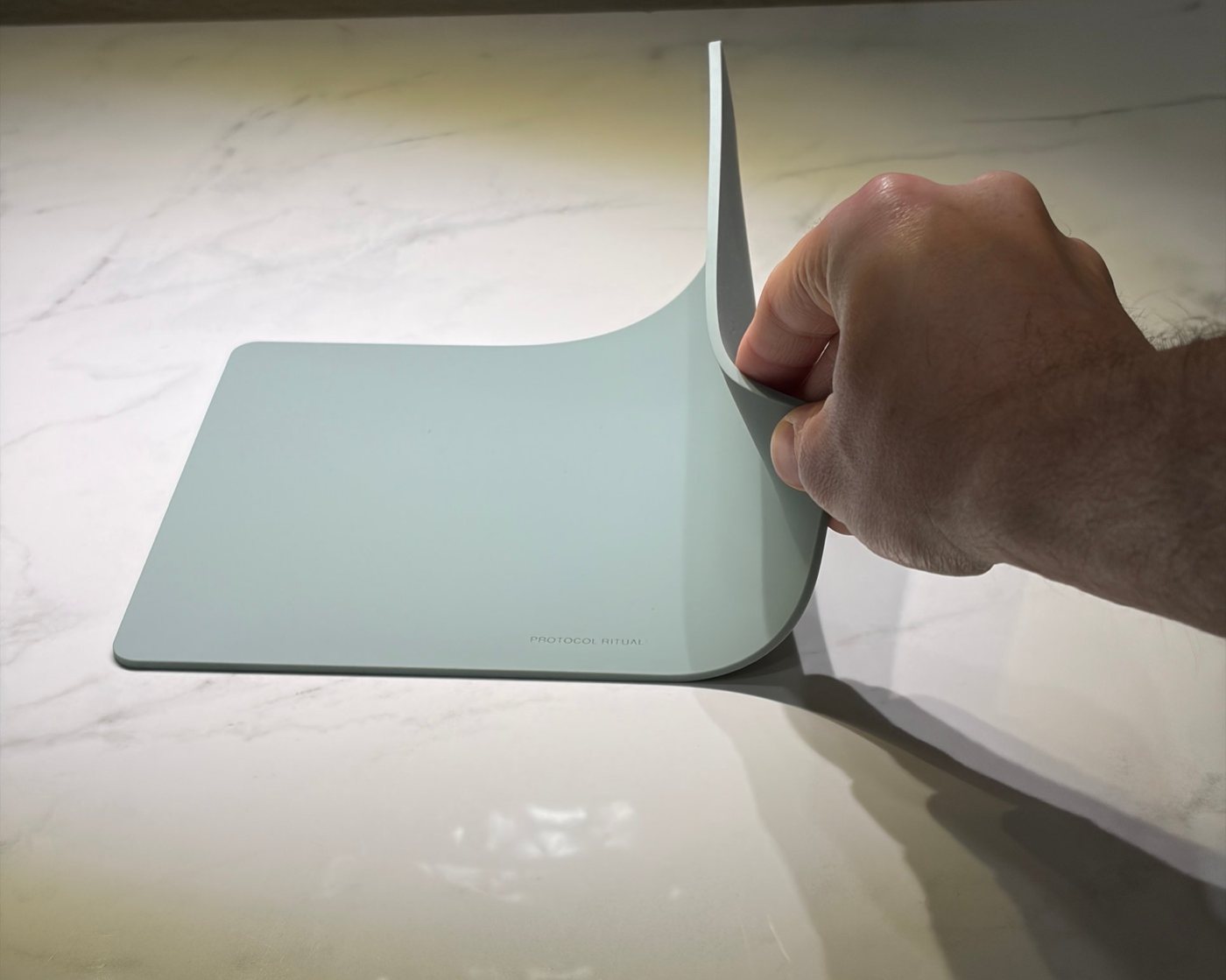
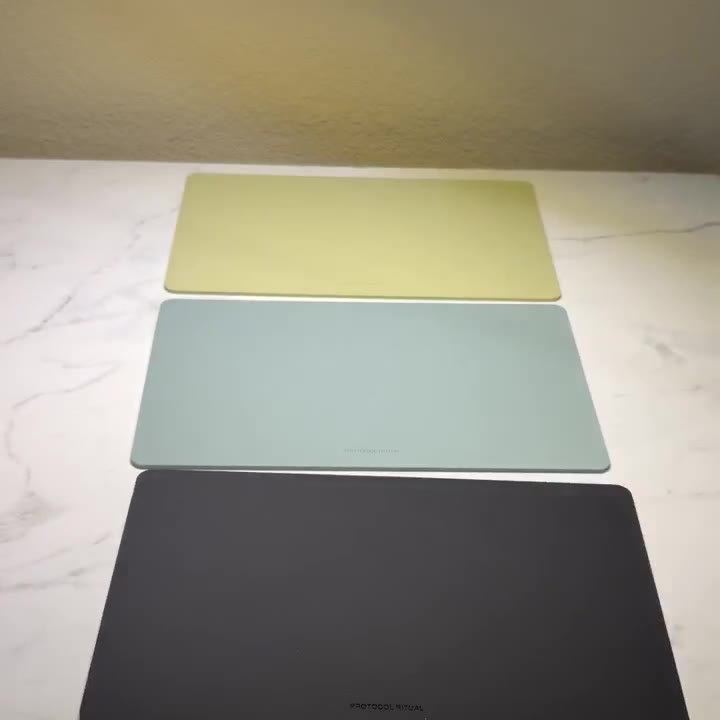
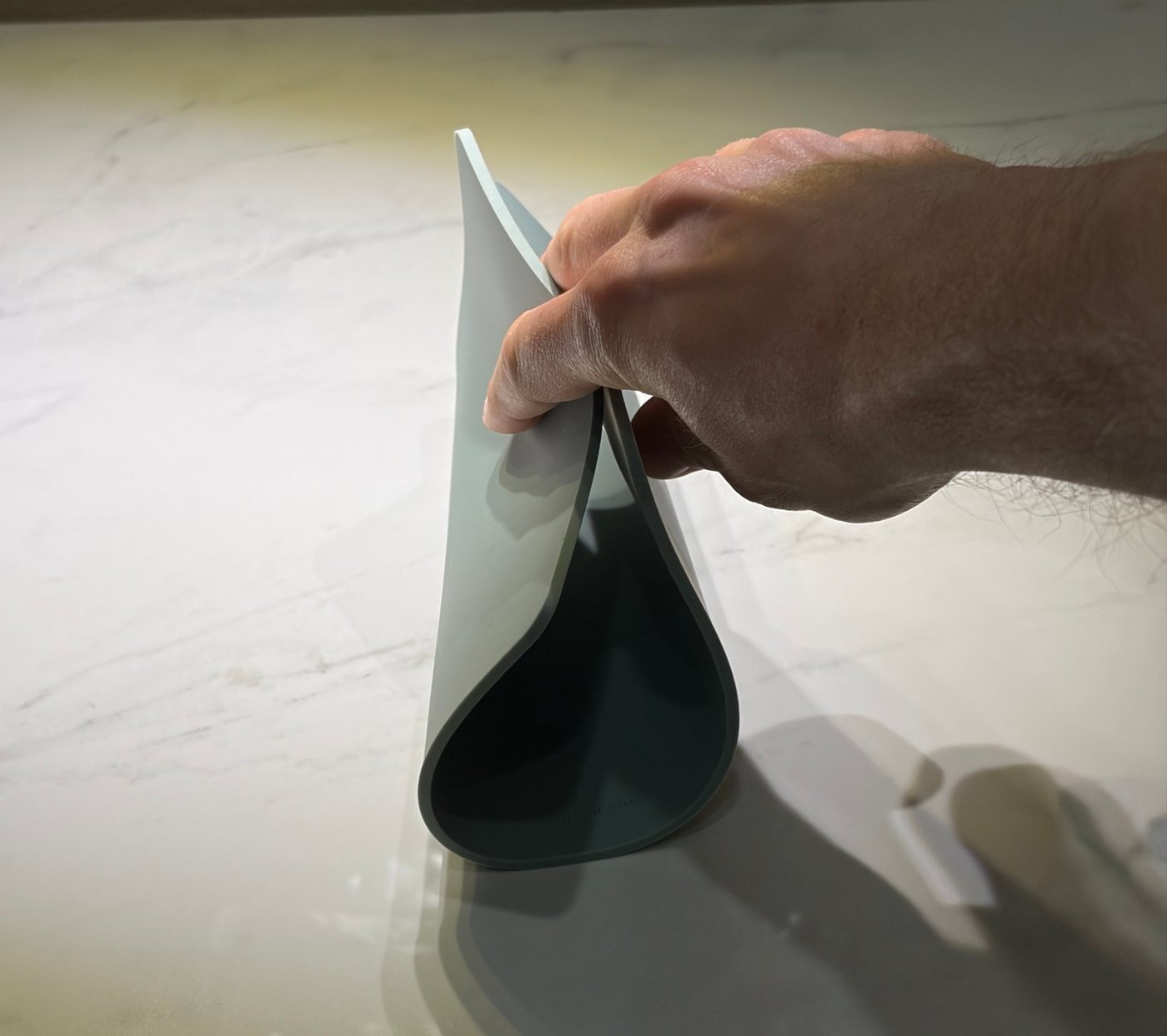
- Reconstitution mat. Weighted platinum-cured silicone, printed with the mark, in the clinic's choice of color.
- Prep pads. Each individually sealed pouch is printed with the clinic's name. The box of 90 (60 skin prep, 30 mat prep) carries the mark too.
- Cold-chain case. The Cold Pod lid is engraved; the phase-change pouches inside are printed.
- Rechargeable cooler (Totem). The mark is laser-engraved on the body, in a printed box.
Plain versions of all of these are available as well. Some clinics start plain and add their mark on the second run.
How a proof works
- The clinic sends a vector logo (SVG, PDF or AI) and says what it dispenses: vial sizes, syringe type, pen or vial, refrigerated or not.
- The supplier returns a proof for every surface: the lid, the mat, the pouch, the box. The tray drawing comes with it.
- The clinic signs off the proofs, or sends corrections.
- A physical sample arrives with the clinic's mark on it. Nothing is made at scale until the clinic has held it and approved it.
- Production runs. The clinic receives photos of the finished units before they ship.
Branded versus stock: the difference the patient feels
A stock kit is assembled from whatever each vendor sells. The pads are the wrong size for the mat, the case has no tray, and the cooler was built for sandwiches.
A branded kit is built around the protocol. The tray fits the vial. The pads come in two sizes because skin prep and mat prep are different jobs. The mat is weighted so it stays put on a bathroom counter. And every piece carries one name, so the whole thing reads as one product rather than a collection.
What a clinic needs to get started
A logo file, a list of what it dispenses, and a shipping address in the continental US. From there the supplier handles proofs, samples, production, freight, customs and delivery. The run arrives at the clinic's door, duties paid.
Get a quote or see the product line.
Questions
What is a white-label injection kit?
A kit of injection accessories (travel case, reconstitution mat, prep pads, cold-chain case) made to a supplier's existing design but finished in the clinic's own name, so the clinic hands it to patients as its own product.
Which surfaces can carry a clinic's logo?
The case lid (engraved or debossed), the silicone mat (printed), each prep-pad pouch (printed), the cooling pouches, the cooler body (laser-engraved) and the outer box.
Does the clinic have to design anything?
No. The clinic sends a logo file and says what it dispenses. The supplier returns proofs for each surface and a physical sample before anything is made at scale.