What is a reconstitution mat, and why would a clinic give one to every patient?
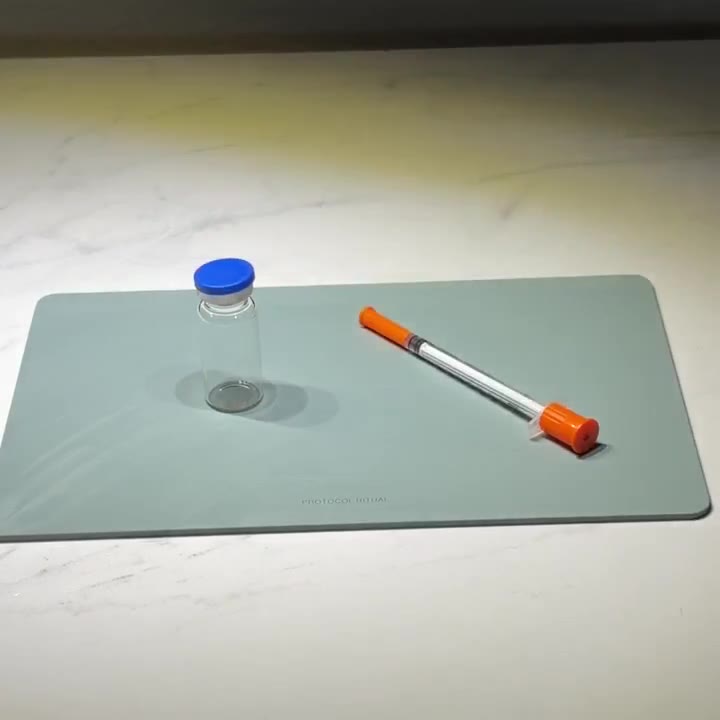
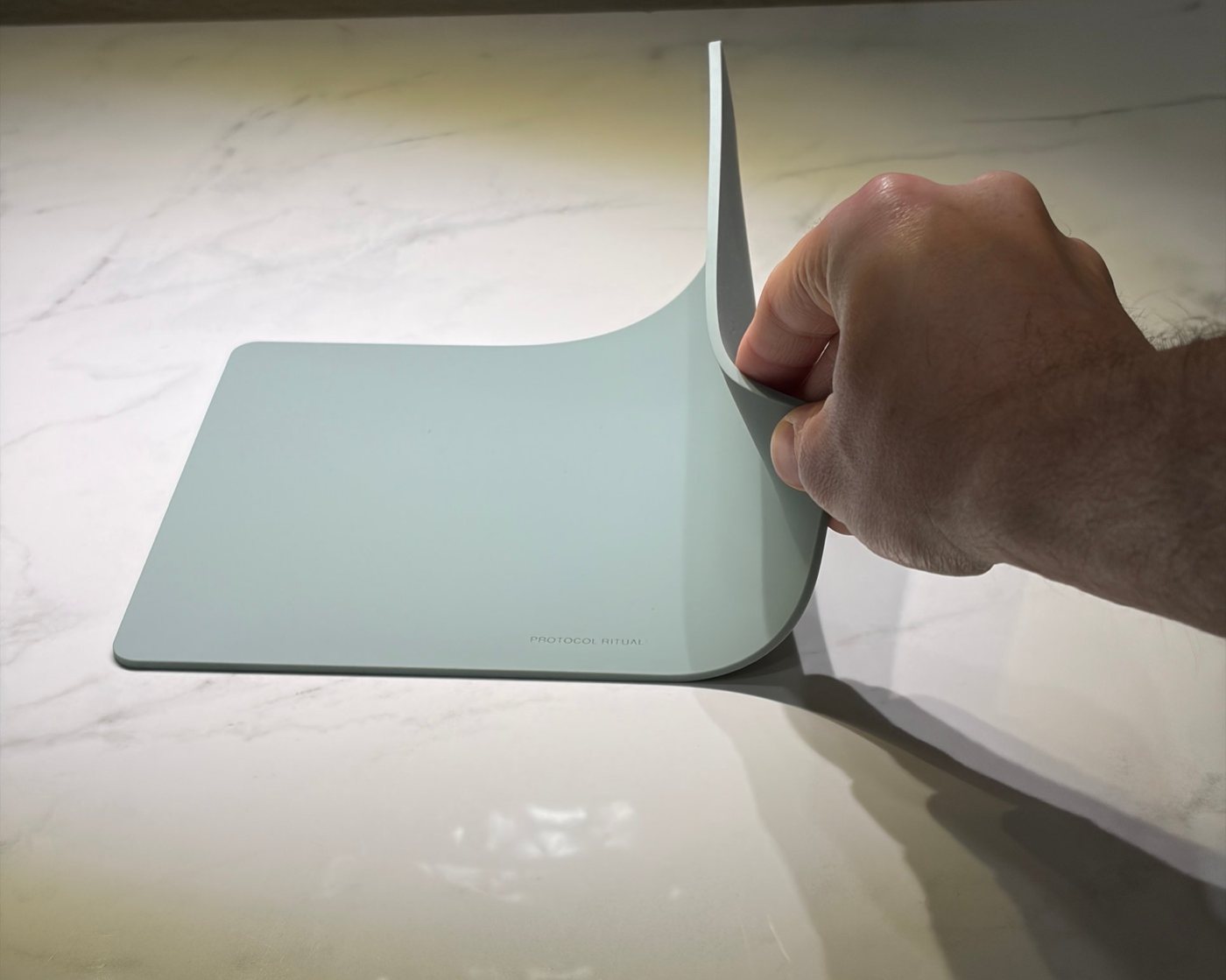
A reconstitution mat is a 3 mm silicone sheet, about the size of a placemat, that a patient lays down before reconstituting or drawing up a dose. It gives one clean, flat surface for the vial, the syringe and the opened pad. That is the whole job, and it solves a problem most clinics never see: where the patient actually does this at home.
The problem it fixes
Reconstitution happens on a bathroom counter, a kitchen table, a hotel desk, the center console of a car. None of those is clean. Few are flat. A vial on a sloped counter tips; a syringe on a wet surface picks up whatever is there.
A mat gives the patient a ritual: mat down, pad open, vial out, draw, done, wipe, mat away. The same sequence every dose, on the same surface, wherever they are.
What to look for
- Platinum-cured silicone. Silicone is cured one of two ways, with peroxide or with platinum. Platinum curing leaves no peroxide by-products in the finished material. Platinum-cured vs peroxide-cured explains why that matters.
- Tested to FDA and LFGB, with reports. The US rule for rubber in repeated food contact is 21 CFR 177.2600. Germany's LFGB, with the BfR recommendation for silicones, tests more. A supplier who has tested the silicone will send the reports. Ours: SGS, January 2026, seven tests, seven passes. What the FDA rule means and LFGB vs FDA go through both.
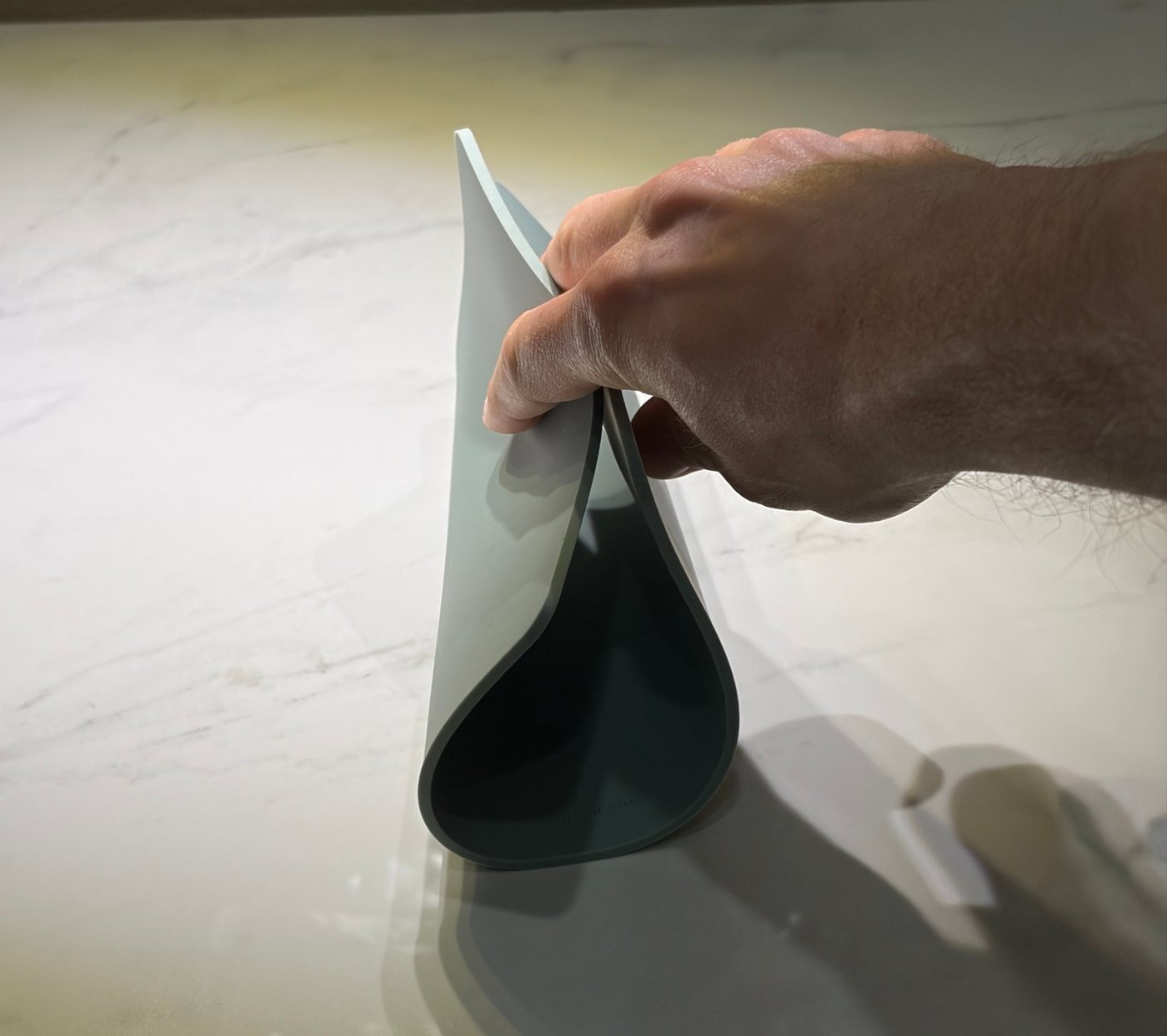
- 3 mm, folds without creasing. Thin mats curl and slide; thick ones won't fit in a case. At 3 mm and 132 g, ours lies flat on the counter, folds into a case lid, and opens flat again with no crease line.
- Wipes back to new. The mat should take a 70% isopropyl alcohol pad before and after each use without marking. That is why our prep-pad box includes a larger mat-prep size alongside the skin-prep size. How to clean a silicone mat has the routine.
- Printed, not stickered. The clinic's mark should be printed into the surface so it survives alcohol wipes.
How it fits the rest of the kit
The mat is the second thing out of the case and the last thing back in. It folds into the lid of the Home Kit. The large prep pads are sized to wipe it. The vial and syringe sit on it between steps.
For the clinic, it is also the most visible surface in the kit. The lid shows the mark once, when the case opens. The mat shows it for the entire dose.
Colors and the clinic's mark
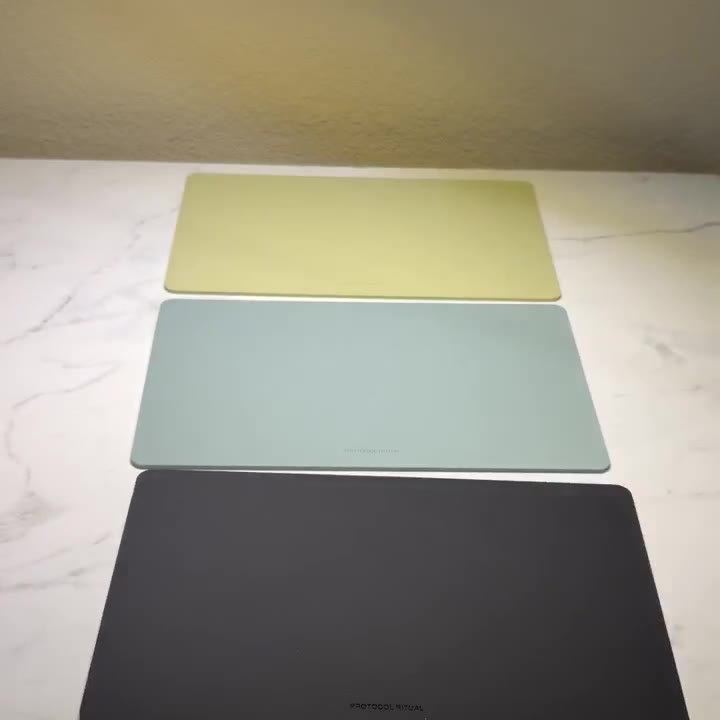
Stock colors are sage (Pantone 15-0318 TCX), slate (16-5804 TCX) and black (19-0303 TCX). The clinic's mark is printed on the mat, and a custom color is a run of its own. A plain mat with no mark is also available. Choosing a mat color covers the options.
Where the mat is used beyond the kit
Clinics use the same mat on the front desk, in treatment rooms, in refill boxes and in onboarding kits. A patient who sees the same mat at the clinic and at home connects the two.
Questions
What is a reconstitution mat for?
It gives the patient one defined, clean, flat surface for the vial, the syringe and the opened pad while they reconstitute and draw up a dose, instead of a bathroom counter or hotel desk.
What should the mat be made of?
Platinum-cured silicone, tested by an accredited lab to the US FDA rule for rubber in repeated food contact (21 CFR 177.2600) and to Germany's LFGB. Ask for the test reports. It should be about 3 mm thick and wipe clean with a 70% isopropyl alcohol pad.
Can the mat carry the clinic's logo?
Yes. The mark is printed on the mat, and the mat comes in the clinic's choice of color. Stock colors are sage, slate and black.