

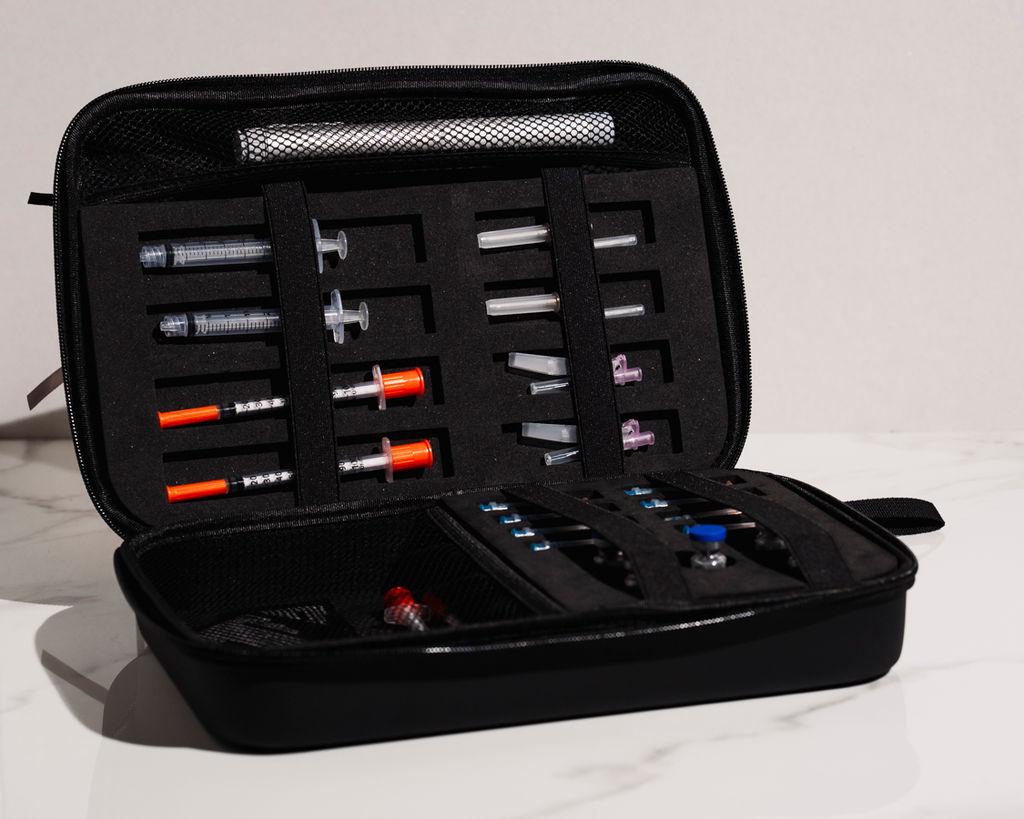
Starting a weekly injectable medication can introduce new responsibilities into your home. A consistent injection day routine can help you remember your scheduled dose, keep necessary supplies together, follow your medication’s instructions, and document useful information for your healthcare provider. It cannot guarantee that side effects will be prevented, but it can make the practical parts of injection day feel more orderly and manageable.
GLP-1 medications do not all use the same device or follow identical instructions. Some products come in single-dose autoinjectors. Others use multi-dose pens, vials, or syringes. Your prescription label, Medication Guide, and manufacturer’s Instructions for Use should always take priority over general online advice.
The goal of an at-home routine is therefore not to invent a universal injection technique. It is to create an organized environment in which you can follow the directions for your specific medication carefully and consistently.
Five Steps for an Organized Injection Day
A practical routine can be built around five basic actions:
- Review your medication instructions.
- Gather and organize your supplies.
- Choose and document an appropriate injection site.
- Follow the device-specific injection steps.
- Dispose of used sharps and record relevant information.
These steps focus on preparation and organization. Questions about dosing, nutrition, side-effect treatment, missed doses, or medication changes should be directed to your prescriber or pharmacist.
Step 1: Review Your Medication Instructions
Before preparing an injection, confirm that you have the correct medication and prescribed dose. Check the label and review the Instructions for Use supplied with the product.
You may also need to inspect the medication as directed. For example, some manufacturers instruct patients not to use a product if the solution is cloudy, discolored, contains particles, or appears damaged. The exact inspection requirements depend on the medication and device.
Confirm:
- The medication name
- The prescribed dose
- The expiration date
- The scheduled injection day
- The condition of the pen, vial, or syringe
- The manufacturer’s storage instructions
Do not use a medication that has been frozen, exposed to temperatures outside its approved range, damaged, or stored improperly. Contact your pharmacist when you are uncertain whether a medication is still usable.
Does the Injection Need to Be Coordinated With a Meal?
Meal requirements depend on the product and formulation.
For example, current prescribing information states that Wegovy injection and Zepbound injection may be administered at any time of day, with or without meals. That does not necessarily apply to every injectable medication or to oral versions of the same drug.
Some patients notice that certain foods or meal sizes affect gastrointestinal symptoms, but there is no universal requirement to eat immediately before a weekly GLP-1 injection. Follow your provider’s advice rather than adopting a fixed fasting or meal schedule from a general article.
Step 2: Create a Clean, Organized Preparation Area
Choose a clean, stable, well-lit surface. Keep food, drinks, cosmetics, household cleaners, and unrelated objects away from the preparation area.
Gather the supplies required for your particular medication before you begin. Depending on the product, these may include:
- Your medication pen, vial, or syringe
- A new pen needle, when applicable
- Alcohol prep pads, when directed
- Clean gauze or a small bandage
- Your injection-site log
- An appropriate sharps-disposal container
Avoid opening, uncapping, or assembling the device until you are ready to follow the manufacturer’s instructions.
A dedicated injection station or organization system can reduce the need to search through drawers, bags, or bathroom cabinets. It may also help keep prescription supplies discreet and separate from ordinary household products.
An organizer is not a substitute for approved medication storage. Refrigerated medications must remain within their required temperature range, and sharps should remain in a proper disposal container rather than inside a general supply case.
Step 3: Choose and Rotate Your Injection Site
Commonly approved injection areas for weekly GLP-1 products include the abdomen, thigh, and upper arm. However, you should verify the permitted sites for your specific medication.
Wegovy’s prescribing information identifies the abdomen, thigh, and upper arm as approved areas and instructs patients to rotate the injection site with each dose. Zepbound provides similar directions and states that another person should administer an injection into the back of the upper arm.
Some device instructions tell users to remain at least two inches away from the belly button. Follow that requirement when it appears in your product’s Instructions for Use.
Avoid Unsuitable Skin
Do not inject into skin that your product instructions tell you to avoid. This commonly includes areas that are:
- Tender
- Bruised
- Red
- Hard
- Scarred
- Irritated
- Otherwise visibly abnormal
Wegovy’s current Instructions for Use, for example, advise against injecting into tender, bruised, red, or hard skin and recommend avoiding scars and stretch marks.
Contact your healthcare provider if you notice persistent lumps, swelling, warmth, worsening redness, drainage, or another unusual reaction.
Keep a Simple Rotation Log
A written record can help prevent you from returning to the exact same spot unintentionally.
A basic entry might read:
Date: August 7
Medication: As prescribed
Area: Right thigh
Notes: No immediate reaction
You may use the same general body area again when your medication permits it, but avoid using the exact same spot repeatedly. Your provider can help you develop an appropriate rotation pattern.
Step 4: Follow the Instructions for Your Specific Device
There is no single injection technique that applies to every GLP-1 medication.
A single-dose autoinjector may need to be pressed firmly against the skin until a visual indicator stops moving. A multi-dose pen may require attaching a new needle, checking medication flow, dialing a dose, pressing a dose button, and keeping the needle in place for a specified period. A vial-and-syringe product follows a different process.
Because of these differences, do not rely on a universal rule such as “always hold the device for 10 seconds” or “always inject at a 90-degree angle.” Follow the illustrated Instructions for Use packaged with your medication.
General preparation principles include:
- Wash and dry your hands.
- Check the medication label.
- Use a new needle when the product requires one.
- Clean the site as directed.
- Allow the skin to dry after using an alcohol prep pad.
- Do not touch the cleaned area unnecessarily.
- Keep the device in place until its instructions indicate that the injection is complete.
- Never share pens, syringes, or needles.
Some pens use clicks, windows, bars, plungers, or other indicators to show that delivery has finished. Review those indicators before injection day so you are not trying to interpret them for the first time while administering the dose.
What If Medicine Appears on the Skin?
A small drop may occasionally appear after an injection. Certain manufacturers advise keeping the device pressed against the skin until its completion indicator has fully stopped.
Do not immediately administer another dose because you see moisture or a droplet. It can be difficult to determine how much medication was delivered. Consult the product instructions, pharmacist, or prescriber for guidance.
Step 5: Dispose of Sharps and Record the Dose
Place used needles and other sharps into an appropriate disposal container immediately after use. Do not leave them loose on the counter or place them directly into household trash.
A proper sharps container should be:
- Closable
- Puncture-resistant
- Leak-resistant on the sides and bottom
- Stable enough to remain upright
- Clearly identified as containing sharps
FDA-cleared containers are preferred when available. Depending on local regulations, an alternative heavy-duty plastic household container may sometimes be permitted. Disposal rules differ among states and communities, so consult your local waste department, health department, pharmacist, or approved collection program.
Do not overfill the container. Close and replace it according to its fill line and disposal instructions.
Once cleanup is complete, document the injection. Useful details may include:
- Date and time
- Medication and prescribed dose
- Injection area
- Any device problem
- Immediate skin reaction
- Symptoms that develop later
Do not record sensitive prescription information in a place where it can be viewed by visitors or unauthorized household members.
Hydration and Nutrition on Injection Day
GLP-1 medications commonly cause gastrointestinal side effects. In adult weight-management trials included in Wegovy prescribing information, nausea occurred in approximately 44% of treated participants, compared with 16% receiving a placebo. Vomiting, diarrhea, constipation, abdominal discomfort, and reflux were also reported. These percentages are specific to the studied product, dose, population, and trial program and should not be applied to every GLP-1 medication.
Maintaining adequate fluid intake can be important, particularly when nausea, vomiting, or diarrhea occurs. GLP-1 prescribing information warns about acute kidney injury associated with volume depletion. However, there is no universally appropriate number of ounces that every patient should drink before an injection.
People with kidney disease, heart failure, electrolyte disorders, or prescribed fluid restrictions may need individualized guidance. Ask your provider how much fluid is appropriate for you.
Similarly, no single injection-day meal plan has been proven to prevent side effects for everyone. Some patients find smaller portions or foods that are lower in fat easier to tolerate when experiencing nausea, but these choices should be adjusted to personal tolerance and clinical advice.
Seek medical guidance when symptoms make it difficult to eat or drink.
Planning Around Possible Side Effects
Semaglutide and tirzepatide remain in the body for an extended period, but their pharmacokinetic profiles differ. Semaglutide injection reaches maximum plasma concentration approximately one to three days after dosing. Tirzepatide reaches its maximum concentration at a median of approximately 24 hours, with a reported range of 8 to 72 hours.
Those numbers describe medication concentration. They do not establish an exact “side-effect peak” for every patient.
Rather than assuming symptoms will occur at a particular hour, record what actually happens after several doses. Note when symptoms begin, how long they last, their severity, and whether they interfere with eating, drinking, sleeping, or normal activities.
That information can help your provider determine whether symptoms reflect expected adjustment, a dose-escalation issue, another medication, or a condition requiring evaluation.
When to Contact a Healthcare Provider
Contact your healthcare provider when side effects are persistent, worsening, difficult to manage, or preventing adequate food or fluid intake.
Seek urgent medical attention for symptoms such as:
- Severe abdominal pain that does not go away
- Abdominal pain that radiates to the back
- Difficulty breathing
- Swelling of the face, lips, tongue, or throat
- Widespread hives or signs of a serious allergic reaction
- Fainting or severe weakness
- Persistent vomiting or inability to keep fluids down
- Signs of severe dehydration
- Severe or rapidly worsening injection-site symptoms
Current Wegovy and Zepbound prescribing information tells patients to stop using the medication and contact a healthcare provider promptly when persistent severe abdominal pain suggests possible pancreatitis. Serious allergic reactions require immediate medical help.
Do not alter, delay, repeat, or stop a prescribed dose solely on the basis of general online information unless emergency instructions for your medication direct you to do so.
Frequently Asked Questions About Injection Day
What is the best day to take a weekly GLP-1 injection?
There is no universally best day. Choose the day recommended by your provider and permitted by your medication instructions. Weekly products are generally administered on the same day each week.
Base your choice on a schedule you can follow reliably rather than on an unsupported promise that a particular day will prevent side effects.
Should I take my injection with food?
That depends on the medication. Wegovy and Zepbound injections may be taken with or without meals. Other medications or formulations may have different requirements.
Should I let the pen warm up before injecting?
Follow the product-specific Instructions for Use and storage guidance. Do not apply a universal 10- or 15-minute rule to every pen.
Never attempt to warm medication with hot water, a microwave, direct sunlight, a heating pad, or another heat source.
Can I use the same injection area each week?
Some products allow the same general body area to be used again, provided the exact spot is changed. Rotate sites according to your product instructions and avoid irritated, bruised, hard, or otherwise unsuitable skin.
What should I do if I forget a dose?
Missed-dose rules differ by medication. Consult the prescribing instructions or contact your pharmacist. Do not double the next dose unless your prescriber or the official medication instructions explicitly direct you to do so.
How should I travel with an injectable medication?
Review the manufacturer’s permitted storage temperatures and travel instructions. Keep the medication in its original labeled packaging when practical, protect it from freezing and excessive heat, and carry necessary supplies in accordance with applicable transportation rules.
Do not assume that every injectable medication requires the same cooler, ice pack, or room-temperature limit.
Make the Routine Repeatable
A useful injection-day system does not need to be complicated. It should help you:
- Keep nonrefrigerated supplies organized
- Maintain discretion
- Follow the correct Instructions for Use
- Rotate injection sites
- Dispose of sharps appropriately
- Record information for future appointments
The routine should support your prescribed treatment—not replace medical instruction.
By creating a designated preparation area, keeping supplies together, documenting injection sites, and reviewing your medication instructions before each dose, you can turn an improvised household task into a more organized weekly process.
Bring structure and discretion to your at-home protocol with the Protocol Ritual Kit. Organize your preparation supplies, maintain a consistent routine, and keep clinical clutter out of sight. Medication storage and sharps disposal must continue to follow the instructions provided by your pharmacist, manufacturer, and local authorities.
Medical Disclaimer
This content is provided for general organizational and educational purposes only. It does not provide dosing instructions, individualized nutrition or hydration recommendations, or medical advice. Always follow the prescription label and Instructions for Use supplied with your medication. Contact your healthcare provider or pharmacist with questions about injection technique, missed doses, storage, side effects, or treatment changes.