

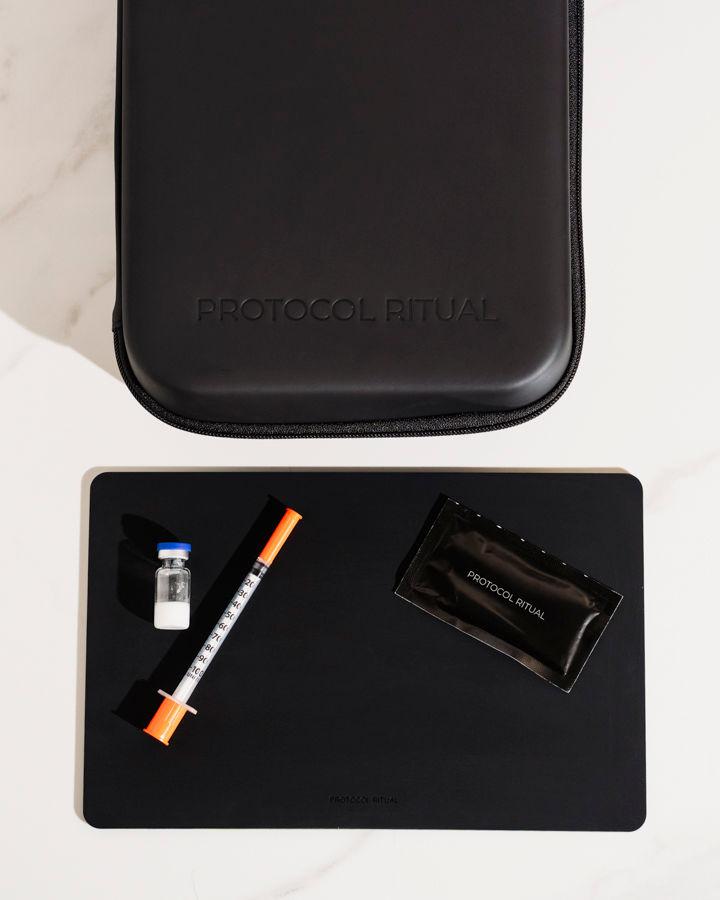
Learning how to store tirzepatide is less about building an elaborate setup and more about creating a consistent system that protects your medication, keeps supplies organized, and makes travel easier to manage. The same principle applies when researching how to store tirzepatide vial supplies: follow the instructions provided with your specific prescription, separate temperature-sensitive medication from general accessories, and use a discreet organizer to keep the rest of your routine in order. Whether your prescription is supplied as a Mounjaro or Zepbound injection pen, a single-dose vial where available, or another pharmacy-dispensed format, storage and travel should begin with the official labeling and guidance from your pharmacist or healthcare provider.
Tirzepatide users are part of a growing group of people managing injectable routines at home, at work, and while traveling. Yet many people are still expected to organize everything with a collection of plastic bags, cardboard boxes, loose prep supplies, and improvised surfaces. Protocol Ritual approaches this differently. The goal is not simply to store individual items. It is to create a repeatable station that supports preparation, organization, discretion, and travel.
The distinction matters. The Protocol Ritual case is an organizational system, not a refrigerator, cooler, or cold-chain device. It does not cool medication or maintain a specific temperature. Any medication requiring temperature control must be handled according to its official product labeling and the instructions of a pharmacist or healthcare provider.
Start with the Instructions for Your Specific Prescription
Storage requirements can vary according to the medication format, manufacturer instructions, dispensing pharmacy, and whether the product has been placed into use. Because of those variables, the most reliable source of information is the packaging and documentation supplied with your prescription.
Before organizing your tirzepatide routine, review:
- The pharmacy label
- The manufacturer’s instructions included with the medication
- Any written storage information supplied by your pharmacy
- Guidance from your pharmacist or prescribing provider
- Instructions concerning refrigeration, room-temperature exposure, light, heat, freezing, and disposal
Do not assume that instructions for one injectable medication automatically apply to another. You should also avoid relying on a social media post, travel forum, or generic medication-storage article when the official information for your prescription is available.
If any part of the label is unclear, ask your pharmacist before changing how or where the medication is stored.
Medication Storage and Supply Organization Are Different Jobs
A well-designed home injection setup separates two related but distinct needs.
The first is medication storage. This includes following all temperature, light, handling, and expiration instructions associated with the prescribed product.
The second is supply organization. This includes keeping alcohol prep pads, compatible accessories, documentation, disposal information, and other routine items together in a clean and predictable system.
A premium case can support the organizational side of the routine, but it should never be treated as a substitute for required refrigeration or another approved temperature-control method.
This distinction is especially important for Protocol Ritual. The current Protocol Ritual case does not include a cooling system, insulated cold-chain compartment, temperature monitor, or refrigeration function. It is intended to organize the tools around a routine. It does not keep medication cold.
How to Organize Tirzepatide Supplies at Home
A dependable setup begins with assigning a permanent location to the items used in your routine. The goal is to reduce clutter and prevent supplies from migrating between bathroom drawers, kitchen cabinets, backpacks, and shipping boxes.
A complete organizational station may include:
- Prescribed medication stored according to its official instructions
- Alcohol prep pads
- The supplies specifically provided or recommended for the prescribed format
- A dedicated preparation surface
- Pharmacy documentation
- Travel documentation when needed
- A calendar, reminder system, or personal routine tracker
- Information about appropriate sharps disposal
- A separate container for used sharps, where applicable
Keep unused supplies separate from used items. Do not return used components to the clean section of your organizer. Items intended for disposal should move directly into an appropriate disposal container rather than being left on the preparation surface or placed back inside the case.
The Protocol Ritual case is designed to support this kind of separation and order. Instead of treating an injection routine as a loose collection of objects, it gives each part of the process a defined place.
Choose a Consistent Storage Location
The best organizational location is one that is private, predictable, and appropriate for the supplies being kept there. It should also be inaccessible to children, pets, and anyone who should not handle the medication or equipment.
Avoid leaving supplies in places where they can be exposed to uncontrolled conditions, such as:
- A vehicle
- Direct sunlight
- A windowsill
- A bathroom with frequent heat and humidity changes
- An open countertop accessible to children or guests
- A gym bag that is routinely left in hot or cold environments
- Checked luggage during air travel
Medication should remain in the location required by its official storage instructions. General supplies can be stored in the Protocol Ritual case so they remain organized, discreet, and ready when needed.
Keeping everything in one dedicated area also makes it easier to notice when routine supplies are running low. You are less likely to discover an empty package at an inconvenient moment when each item has a defined location.
Create a Dedicated Preparation Surface
A stable preparation surface can bring more consistency to an at-home routine. It provides a clear visual boundary between ordinary household clutter and the items being organized for that specific task.
Protocol Ritual includes a weighted preparation mat designed to create that dedicated space. The mat is not a medical device and does not sterilize the surrounding area. Its purpose is organizational. It creates a repeatable surface where supplies can be arranged instead of placed directly on a paper towel, crowded bathroom counter, or bedside table.
Before each use, follow the care instructions for the mat and keep the surrounding area orderly. Place only the items needed for the routine on the preparation surface. Food, drinks, cosmetics, keys, phones, and unrelated household objects should remain elsewhere.
A preparation surface works best when it is part of a larger system:
- Retrieve the organized case.
- Set out the preparation mat.
- Arrange only the necessary supplies.
- Follow the instructions provided by your healthcare team.
- Move disposable items to the correct disposal container.
- Return unused supplies to their designated compartments.
- Clean and put away the station.
This process is about consistency and organization, not clinical technique.
How to Travel with Tirzepatide
Travel introduces new variables, including temperature changes, security screening, delays, limited privacy, and unfamiliar accommodations. A travel plan should account for each of these before departure.
Begin by reviewing the medication’s official travel and storage instructions. Confirm whether the product must remain refrigerated, whether temporary room-temperature storage is permitted, and what limits apply. Because instructions can vary, do not use a general rule in place of the information supplied with your prescription.
When packing, divide the routine into two categories:
Temperature-sensitive medication: Transport this according to the official labeling and professional guidance. Use an appropriate temperature-control solution when one is required.
Organizational supplies: Keep alcohol prep pads, documents, compatible accessories, and the preparation mat together in a discreet case.
The Protocol Ritual case addresses the second category. It keeps supplies ordered and protected from the disorder of a general toiletry bag or backpack. It does not create or maintain cold-chain conditions.
Keep Medication in Your Carry-On When Flying
When air travel is involved, keeping prescribed medication and essential supplies in accessible carry-on baggage is generally more practical than placing them in checked luggage. Checked baggage may be delayed, lost, or exposed to conditions you cannot monitor.
Before flying:
- Review current airline and airport-security requirements.
- Keep the medication in its pharmacy-labeled packaging when practical.
- Bring supporting prescription documentation when appropriate.
- Pack essential supplies together so they can be presented clearly during screening.
- Allow extra time for security.
- Avoid placing required medication exclusively in checked baggage.
- Confirm the availability of appropriate storage at your destination.
Security policies and entry requirements can vary by country and may change over time. For international travel, review the rules for every destination and transit country. A medication that is familiar at home may be subject to different documentation or import requirements elsewhere.
Plan for Temperature Control Separately
Cold-chain planning deserves special attention because an organizational case and a cooling system perform completely different functions.
If the instructions for your prescription require refrigeration or controlled temperatures, select a travel solution intended for that purpose and use it exactly as directed. Ask your pharmacist how to prevent both overheating and unintended freezing. Direct contact with frozen packs may be inappropriate for some medications, so professional guidance is important.
Consider how you will manage temperature requirements during:
- Transportation to the airport
- Security screening
- The flight
- Ground transportation
- Hotel check-in
- Extended delays
- Power interruptions
- Outdoor activities
- The return trip
The current Protocol Ritual system should not be represented as a cooler or insulated medication carrier. A cold-chain accessory may be explored separately in the future, but it is not part of the present case.
Prepare for Your Destination Before You Leave
Do not wait until arrival to determine where your medication and supplies will be kept. Contact the hotel, rental property, cruise line, or host in advance when specific storage conditions are necessary.
Questions to resolve may include:
- Is an appropriate refrigerator available?
- Is it located inside the room or in a shared area?
- Can the temperature be controlled or verified?
- Is there a secure place away from children and other guests?
- Is a private preparation surface available?
- Where can used sharps be disposed of appropriately?
- What is the backup plan if the expected storage option is unavailable?
Be cautious with compact hotel refrigerators. Conditions may vary, and some units contain freezing compartments or cold spots. Follow professional guidance when determining whether a particular setup is appropriate for the prescription.
Protect Privacy Without Hiding Important Information
Discretion does not mean removing pharmacy labels, concealing medication from security personnel, or traveling without necessary documentation. It means keeping supplies organized in a case that does not announce its contents to everyone nearby.
A discreet case can be useful in shared homes, offices, hotels, and other environments where a person may prefer not to display personal health supplies. Protocol Ritual is designed with this in mind. Its exterior does not need to advertise what is inside, while the internal layout gives routine items a purposeful place.
That balance supports privacy without sacrificing preparedness.
Build a Simple Travel Checklist
A written checklist can prevent rushed packing and reduce the chance that an essential item is left behind.
Before departure, confirm that you have:
- The prescribed medication
- Original or pharmacy-labeled packaging when appropriate
- Any required travel documentation
- Alcohol prep pads
- The accessories intended for the prescription format
- A dedicated preparation mat
- A suitable organizational case
- An approved temperature-control solution if required
- A plan for sharps disposal
- Enough supplies for anticipated delays
- Contact information for your pharmacy and healthcare provider
Do not use the checklist to estimate medication amounts or alter a prescribed schedule. Questions about prescription quantities, timing, or replacement medication should be directed to the pharmacy or prescribing provider.
Common Storage and Travel Mistakes
Even experienced travelers can make organizational mistakes when routines become rushed.
Treating an Organizer as a Cooler
A case may protect supplies from clutter and ordinary handling, but it does not necessarily regulate temperature. Unless a product is specifically designed and validated for temperature control, do not assume it can maintain cold-chain conditions.
Leaving Supplies Loose in a Toiletry Bag
Loose items are harder to inventory, easier to damage, and more likely to become mixed with cosmetics or personal-care products. A compartmentalized system creates separation and makes missing items easier to spot.
Packing Everything in Checked Luggage
Baggage delays can separate a traveler from essential medication and supplies. Plan carry-on access according to applicable security and airline rules.
Removing All Identifying Packaging
Discretion is valuable, but pharmacy information may be useful during travel, security screening, or an unexpected medical situation. Keep relevant documentation available.
Waiting Until Arrival to Plan Storage
Hotel amenities and refrigerator access are not guaranteed. Confirm the destination setup before leaving.
Ignoring the Return Trip
Used sharps, remaining supplies, documentation, and temperature-sensitive medication all require a return plan. Travel organization should cover the entire journey.
Frequently Asked Questions
How should tirzepatide be stored?
Follow the storage instructions supplied with your specific prescription. Consult your pharmacist when instructions concerning refrigeration, room temperature, light, freezing, or travel are unclear.
How should I store a tirzepatide vial?
Keep a pharmacy-dispensed vial under the conditions stated on its label and accompanying documentation. Requirements may vary, so do not substitute generalized online advice for pharmacy instructions.
Can I store tirzepatide in the Protocol Ritual case?
The case can organize supplies and may hold items that are permitted to be kept under the surrounding conditions. It does not refrigerate medication or maintain cold-chain temperatures. Medication requiring temperature control needs a separate, appropriate solution.
Does the Protocol Ritual case include a cooling system?
No. The current case has no cooling, refrigeration, or cold-chain function. It is designed for organization, preparation, discretion, and travel.
Can I take tirzepatide on an airplane?
Travelers can generally carry prescribed injectable medications, but screening rules, airline policies, and international requirements should be reviewed before departure. Keep relevant labels and documentation available.
Should tirzepatide go in checked baggage?
Accessible carry-on storage is commonly preferred for essential medication because checked luggage can be delayed, lost, or exposed to uncontrolled conditions. Follow current security rules and the medication’s official storage instructions.
Can I use an ice pack when traveling?
Use a cooling method only when it is appropriate for your medication and consistent with pharmacy guidance. Some medications must be protected from freezing or direct contact with frozen materials.
How can I keep tirzepatide supplies discreet?
Use a case with a neutral exterior and organized internal compartments. Discretion should not involve removing necessary prescription labels or withholding medication information during security screening.
What should I do with used sharps while traveling?
Plan disposal before departure. Use an appropriate sharps container or another method permitted by your healthcare provider and local rules. Do not place loose used sharps back in the organizational case.
What should I do if my medication is exposed to an unexpected temperature?
Do not guess whether it remains suitable for use. Contact your pharmacist or the manufacturer using the information provided with the prescription.
Turn Your Supplies into a Complete System
Protocol Ritual was built for people who take their routine seriously and want the tools around it to reflect that. We are here for daily users who are tired of piecing together a process from random supplies and are tired of pretending that messy setups are good enough.
With a discreet premium case, a real weighted preparation mat, and custom-branded alcohol prep pads included, Protocol Ritual is an all-in-one organizational kit designed to support the full ritual from start to finish. It does not replace required refrigeration or medical guidance. It gives the surrounding routine the structure, privacy, and intention it has been missing.
Join the launch and be among the first to experience a better standard for daily protocol.